
Finding the Best Toy Poodle Breeders in Georgia: Your Complete 2026 Guide

Picture this: you’re driving through the scenic Georgia countryside, past rolling hills dotted with peach orchards, when you spot a charming farmhouse where tiny, perfectly groomed toy poodles are playing in a sun-dappled yard. This isn’t just a dream—it’s the reality of finding exceptional toy poodle breeders in Georgia who combine Southern hospitality with world-class breeding standards.
Georgia has become a premier destination for families seeking high-quality toy poodles, thanks to its ideal climate, strong agricultural heritage, and growing community of dedicated breeders. Whether you’re a first-time dog owner in Atlanta or an experienced poodle enthusiast in Savannah, finding the right breeder can make all the difference in welcoming a healthy, well-socialized companion into your home.
Key Takeaways
• Georgia hosts numerous reputable toy poodle breeders who prioritize health testing, proper socialization, and AKC standards
• Expect to invest $1,500-$4,000 for a quality toy poodle from established Georgia breeders, with additional ongoing costs
• Health clearances and genetic testing are non-negotiable when selecting a responsible breeder
• Early socialization and proper breeding practices significantly impact your puppy’s lifelong temperament and health
• Building relationships with breeders often leads to better matches and ongoing support throughout your dog’s life
Understanding Toy Poodle Breeders in Georgia’s Landscape
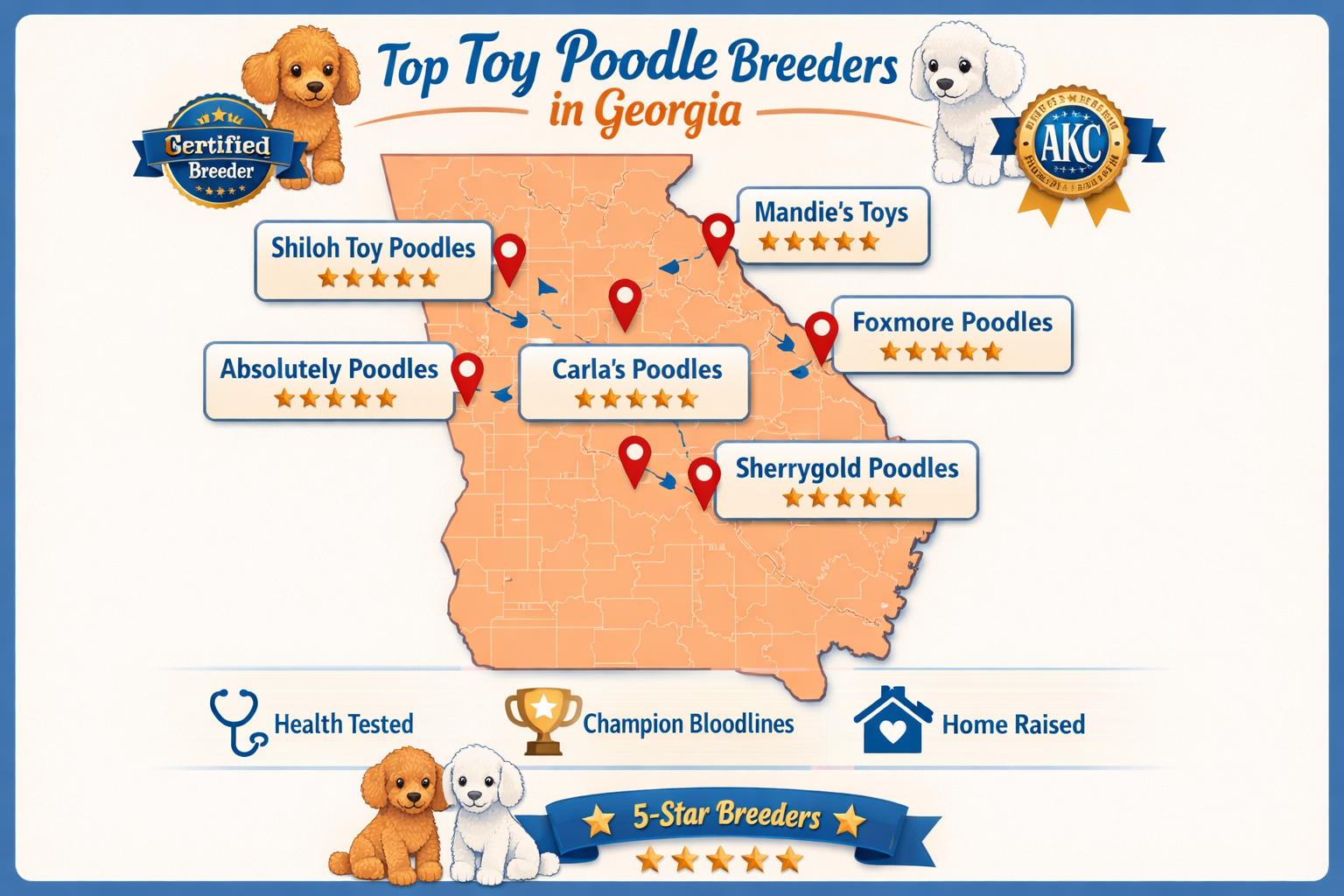
Georgia’s unique position in the Southeast has fostered a thriving community of toy poodle breeders in Georgia who benefit from the state’s moderate climate and strong tradition of animal husbandry. The Peach State offers an ideal environment for raising healthy puppies, with its mild winters and manageable summers allowing for year-round outdoor socialization.
The Georgia Advantage for Toy Poodle Breeding
The state’s agricultural heritage has created a culture that deeply understands animal care and breeding ethics. Many of Georgia’s top breeders come from multi-generational farming families who have applied their knowledge of genetics and animal welfare to toy poodle breeding. This foundation has resulted in some of the most respected breeding programs in the Southeast.
Climate Benefits:
- Moderate temperatures allow for comfortable year-round breeding
- Lower humidity compared to coastal states reduces coat management challenges
- Extended outdoor seasons promote better puppy socialization
Geographic Advantages:
- Central location provides easy access to top veterinary specialists
- Proximity to major universities with veterinary programs
- Strong network of professional groomers and trainers
Regulatory Environment and Standards
Georgia maintains reasonable regulations for dog breeding while ensuring animal welfare standards. The state requires basic licensing for commercial breeders and encourages voluntary participation in breed-specific health testing programs. This balanced approach has attracted serious hobbyist breeders who prioritize quality over quantity.
When searching for the best toy poodle breeders, you’ll find that Georgia’s breeding community often exceeds state minimums, with many participating in advanced health testing and maintaining detailed breeding records that span multiple generations.
What Makes Quality Toy Poodle Breeders in Georgia Stand Out
Exceptional toy poodle breeders in Georgia distinguish themselves through several key characteristics that go far beyond simply producing cute puppies. These breeders understand that their role extends from genetic stewardship to lifelong support for puppy families. Finding the right toy poodles for sale near me is not easy!
Health Testing and Genetic Screening
The foundation of any reputable breeding program lies in comprehensive health testing. Top Georgia breeders invest significantly in genetic screening to prevent hereditary conditions common in toy poodles.
Essential Health Tests Include:
- Progressive Retinal Atrophy (PRA) – DNA testing to prevent blindness
- Hip Dysplasia Evaluation – Though rare in toys, responsible breeders still screen
- Patellar Luxation Assessment – Critical for toy breeds prone to kneecap dislocation
- Cardiac Clearances – Heart health evaluations by certified cardiologists
- Von Willebrand’s Disease – Blood clotting disorder screening
Quality breeders will readily provide documentation of all health clearances and explain the significance of each test. They understand that transparency builds trust and demonstrates their commitment to producing healthy puppies.
Breeding Philosophy and Ethics
The most respected breeders in Georgia operate with a clear philosophy that prioritizes temperament, health, and breed standard conformity over profit. They typically:
- Limit breeding frequency – Allowing adequate recovery time between litters
- Carefully select breeding pairs – Considering genetic diversity and complementary traits
- Maintain detailed records – Tracking health, temperament, and lineage data
- Provide lifetime support – Offering guidance throughout the dog’s life
Socialization and Early Development
Exceptional breeders understand that the first eight weeks of a puppy’s life are crucial for proper development. They implement comprehensive socialization programs that expose puppies to various stimuli in controlled, positive ways.
Early Socialization Programs Include:
- Exposure to household sounds and activities
- Interaction with children and adults of different ages
- Introduction to various textures and surfaces
- Basic handling for grooming and veterinary care
- Positive experiences with car rides and crate training
For those interested in learning more about proper puppy development, exploring early socialization strategies for toy and teacup poodle puppies can provide valuable insights into what quality breeders prioritize.
Facility Standards and Transparency
Reputable breeders welcome visits and are proud to show their facilities. Their breeding areas should be:
- Clean and well-maintained with appropriate ventilation
- Spacious enough for dogs to exercise and play naturally
- Climate-controlled to ensure comfort year-round
- Equipped with proper whelping areas for safe deliveries
- Designed for easy cleaning and disease prevention
“A great breeder’s facility should feel more like a loving home than a commercial operation. The dogs should appear happy, healthy, and genuinely excited to interact with visitors.” – Professional Dog Breeding Association
Red Flags to Avoid When Choosing Toy Poodle Breeders in Georgia
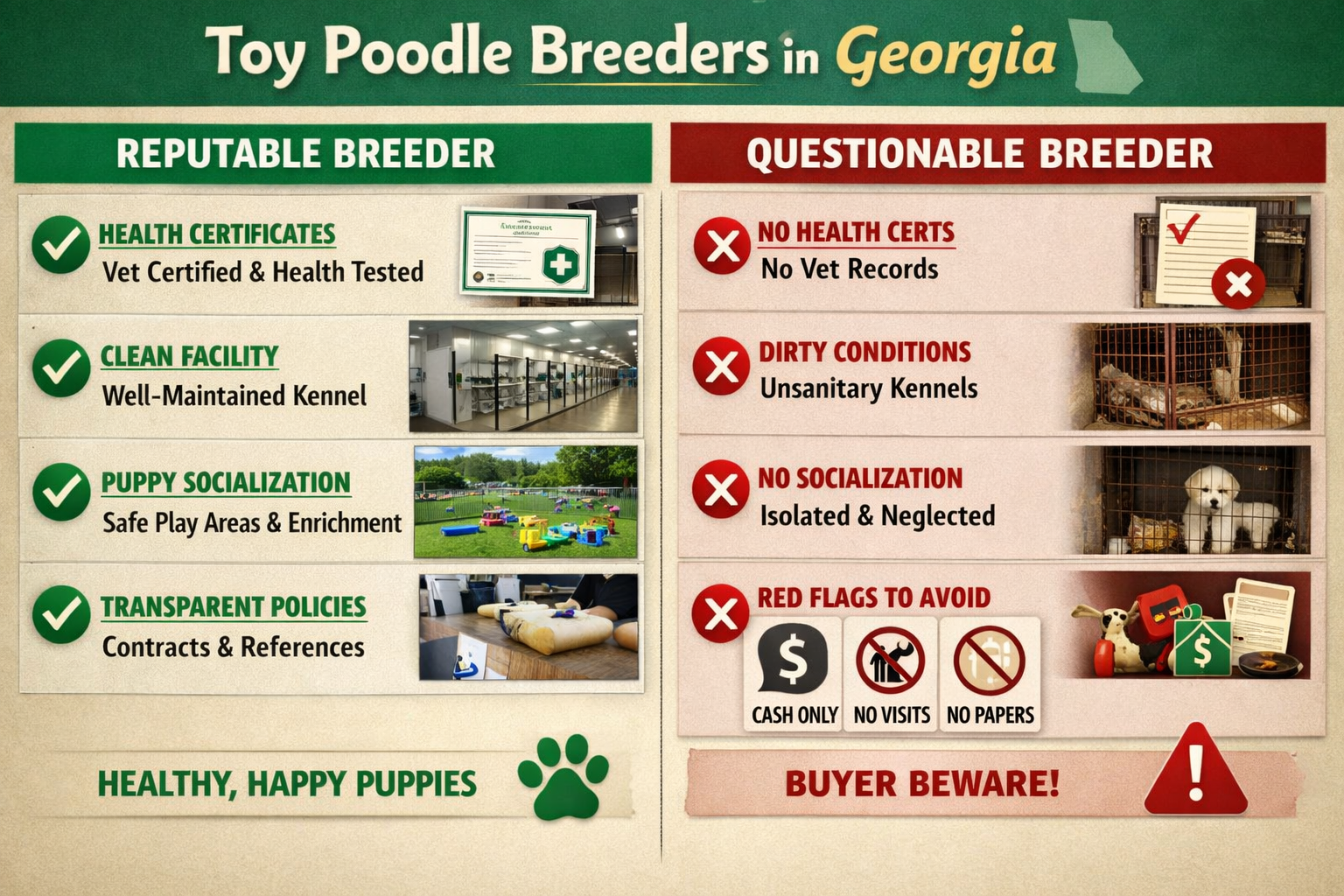
While Georgia hosts many excellent breeders, the state’s popularity has also attracted some less scrupulous operators. Learning to identify warning signs can save you from heartbreak and significant financial loss.
Commercial Puppy Mills vs. Reputable Breeders
Warning Signs of Puppy Mills:
- Multiple breeds available simultaneously
- Puppies always available with immediate pickup
- Reluctance to allow facility visits
- No health testing documentation
- Pressure to purchase quickly
- Unusually low prices that seem “too good to be true”
Online Sales Red Flags
The internet has made it easier to research breeders, but it’s also created opportunities for scams. Be particularly cautious of:
- Stock photos instead of actual puppy pictures
- Requests for full payment before meeting the puppy
- Shipping arrangements without meeting the breeder first
- No phone contact – only email or text communication
- Prices significantly below market rate for the area
Documentation and Contract Issues
Legitimate breeders provide comprehensive documentation and clear contracts. Be wary if a breeder:
- Cannot provide health clearances for breeding dogs
- Offers no health guarantee or warranty
- Refuses to take the puppy back if circumstances change
- Provides vague or incomplete registration papers
- Avoids discussing the puppy’s lineage or breeding history
Understanding common health concerns in toy poodle puppies can help you ask informed questions and evaluate breeder responses more effectively.
Cost Considerations for Toy Poodle Breeders in Georgia
Understanding the financial investment required for a quality toy poodle helps set realistic expectations and budget appropriately for this significant decision.
Initial Purchase Prices
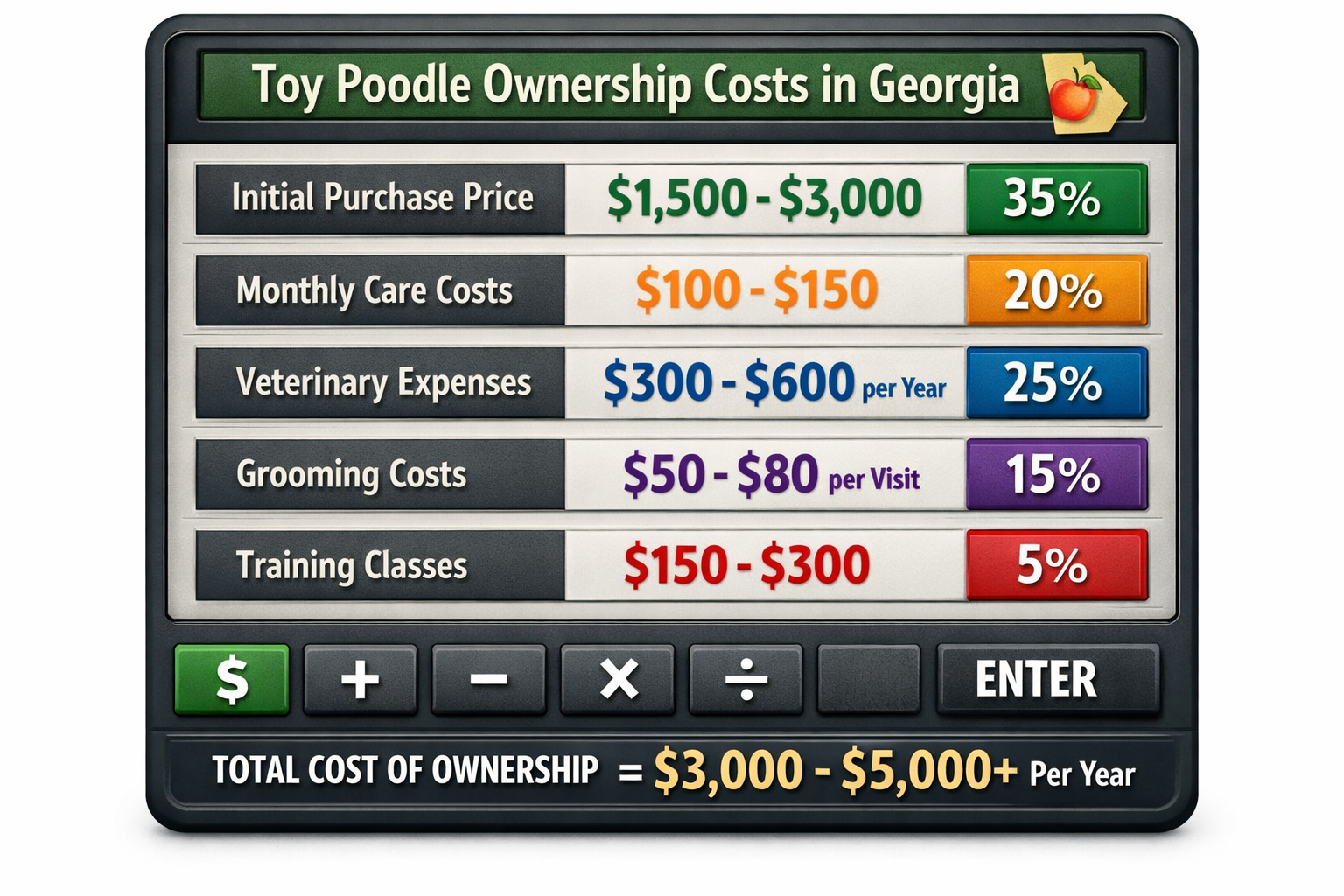
Toy poodle breeders in Georgia typically charge between $1,500 and $4,000 for pet-quality puppies, with several factors influencing the final price:
| Quality Level | Price Range | Characteristics |
|---|---|---|
| Pet Quality | $1,500-$2,500 | Healthy, well-socialized, minor cosmetic flaws |
| Show Potential | $2,500-$3,500 | Excellent conformation, breeding rights possible |
| Champion Lines | $3,500-$4,000+ | Superior bloodlines, show/breeding quality |
Factors Affecting Price
Color and Rarity:
- Standard colors (black, white, brown) typically cost less
- Rare colors (apricot, red, parti) command premium prices
- Solid colors generally cost more than parti-colored
Breeder Reputation:
- Established breeders with proven track records charge more
- New breeders may offer competitive pricing to build clientele
- Geographic location within Georgia affects pricing
Health Testing Investment:
- Extensive health testing increases breeding costs
- Breeders who invest in comprehensive testing typically charge more
- This investment usually results in healthier puppies
Ongoing Ownership Costs
Beyond the initial purchase, toy poodle ownership involves significant ongoing expenses:
Monthly Expenses:
- Food: $30-50 for high-quality small-breed formula
- Grooming: $75-150 every 6-8 weeks
- Healthcare: $50-100 averaged monthly for routine care
- Supplies: $25-40 for toys, treats, and replacements
Annual Expenses:
- Veterinary care: $800-1,500 for routine checkups and preventive care
- Emergency fund: $1,000-3,000 recommended for unexpected health issues
- Training and socialization: $200-500 for classes and activities
For detailed guidance on managing these expenses, reviewing information about budgeting for long-term toy poodle care can provide valuable financial planning insights.
The Selection Process: Working with Toy Poodle Breeders in Georgia
Successfully finding and working with the right breeder requires a systematic approach that protects both you and ensures the best outcome for your future puppy.
Research and Initial Contact
Step 1: Create Your Breeder List
Start by identifying potential breeders through:
- American Kennel Club breeder directory
- Poodle Club of America referrals
- Local dog shows and events
- Veterinarian recommendations
- Online breed-specific forums and communities
Step 2: Initial Screening
Contact breeders with specific questions about:
- Current and planned litters
- Health testing protocols
- Breeding philosophy and goals
- Facility visit policies
- References from previous puppy buyers
The Interview Process
Quality breeders will interview you as thoroughly as you interview them. They want to ensure their puppies go to suitable homes and will ask about:
- Your experience with dogs, particularly small breeds
- Living situation and family composition
- Activity level and lifestyle expectations
- Plans for training, socialization, and healthcare
- Long-term commitment to the dog’s welfare
Questions to Ask Breeders:
- How long have you been breeding toy poodles?
- Can you provide references from recent puppy buyers?
- What health testing do you perform on breeding dogs?
- How do you socialize puppies before they go home?
- What support do you provide to puppy families?
- Do you require spay/neuter contracts for pet puppies?
Facility Visits and Puppy Evaluation
Scheduling Your Visit:
Reputable breeders welcome visits but may have restrictions during certain times (whelping, very young puppies, illness). Respect their guidelines while ensuring you can adequately evaluate the facility and dogs.
What to Observe:
- Overall cleanliness and organization
- Adult dogs’ temperament and health appearance
- Puppy behavior and socialization level
- Breeder’s interaction with their dogs
- Documentation and record-keeping systems
Puppy Selection Criteria:
- Health and vitality
- Appropriate size for age
- Confident but not overly aggressive temperament
- Clean ears, eyes, and nose
- Proper weight and body condition
Learning about building confidence in shy toy poodle puppies can help you evaluate puppy temperaments and understand what behaviors are normal versus concerning.
Contract Negotiation and Finalization
Essential Contract Elements:
- Health guarantee terms and duration
- Return policy if circumstances change
- Spay/neuter requirements and timing
- Registration papers and breeding rights
- Ongoing support and communication expectations
Payment and Pickup Arrangements:
- Deposit requirements and payment schedules
- Final payment timing and acceptable methods
- Pickup scheduling and preparation requirements
- Transportation arrangements if needed
Most reputable breeders require deposits to hold puppies, typically 25-50% of the total price. Ensure you understand refund policies and have clear communication about pickup timing.
Preparing for Your New Puppy
Once you’ve selected your breeder and puppy, preparation becomes crucial for a smooth transition. Quality toy poodle breeders in Georgia will provide guidance on preparing your home and establishing routines.
Essential Supplies:
- Appropriately sized crate for house training
- High-quality small-breed puppy food
- Collar, leash, and identification tags
- Grooming supplies for coat maintenance
- Safe toys appropriate for small mouths
- Baby gates for area restriction
Home Preparation:
- Puppy-proof areas by removing hazards
- Establish designated eating and sleeping areas
- Set up grooming station for regular maintenance
- Create quiet spaces for rest and decompression
Understanding how to prepare your home for a toy poodle puppy can help ensure you’re fully ready for your new family member’s arrival.
Beyond Georgia: Expanding Your Search for Quality Breeders
While Georgia offers excellent options, expanding your search to neighboring states can provide additional choices and potentially better matches for your specific preferences.
Toy Poodle Breeders in Florida
Florida’s proximity to Georgia makes it a viable option for many families. The state’s year-round warm climate and large population have created a robust breeding community. Toy poodle breeders in Florida often specialize in colors and lines that complement Georgia offerings.
Florida Advantages:
- Larger selection due to population density
- Competitive pricing from increased competition
- Specialized breeding programs for specific traits
- Year-round availability for facility visits
Considerations for Florida Breeders:
- Higher humidity may affect coat management
- Hurricane season can impact breeding schedules
- Greater distance for ongoing relationship building
- Different state regulations and requirements
Regional Breeding Networks
Many top breeders participate in regional networks that share bloodlines and breeding expertise. These relationships often result in:
- Coordinated breeding programs that avoid excessive inbreeding
- Shared health testing results and genetic databases
- Referral systems when breeders don’t have suitable puppies available
- Collaborative improvement of breed standards and health
When working with Georgia breeders, ask about their network connections and whether they can recommend colleagues if their current litters don’t meet your needs.
Transportation and Logistics
If you decide to work with a breeder outside Georgia, consider transportation logistics:
Driving Considerations:
- Maximum comfortable distance for pickup trips
- Puppy’s age and travel readiness
- Climate control for small puppy comfort
- Emergency veterinary access along travel routes
Shipping Alternatives:
- Professional pet transport services
- Airline cargo requirements and restrictions
- Climate and timing considerations
- Insurance and health certificate requirements
Most reputable breeders prefer in-person pickup but can arrange safe transportation when necessary. However, meeting your breeder and seeing their facility firsthand provides valuable insights that remote transactions cannot offer.
For families considering broader options, researching information about AKC toy poodle puppies can help understand national breeding standards and what to expect regardless of location.
Long-Term Relationship Building with Your Breeder

The relationship with your chosen breeder shouldn’t end when you take your puppy home. The best toy poodle breeders in Georgia view themselves as lifelong resources for their puppy families.
Ongoing Support and Guidance
Quality breeders provide continuing support in several areas:
Health and Development:
- Guidance on growth milestones and expectations
- Recommendations for veterinary care and specialists
- Advice on nutrition and feeding schedules
- Support during health challenges or concerns
Training and Behavior:
- Socialization recommendations for your specific area
- Training resource suggestions and referrals
- Behavioral guidance for breed-specific traits
- Problem-solving support for challenges
Grooming and Maintenance:
- Coat care instruction and product recommendations
- Professional groomer referrals in your area
- Seasonal care adjustments and tips
- Show preparation if you’re interested in competition
Building Community Connections
Many breeders facilitate connections among their puppy families, creating communities of toy poodle owners who share experiences and support each other. These connections often lead to:
- Puppy playdates and socialization opportunities
- Shared resources for pet care and services
- Group training classes and activities
- Lifelong friendships centered around shared interests
Future Breeding Considerations
Even if you purchase a pet-quality puppy with spay/neuter requirements, maintaining your relationship with the breeder can be valuable if you later decide to add another toy poodle to your family. Breeders often give preference to previous puppy families when new litters become available.
Advantages for Return Customers:
- Priority placement on waiting lists
- Potential discounts for multiple puppy families
- Better matching based on experience with your first dog
- Continued genetic diversity through different bloodlines
For those interested in the comprehensive aspects of toy poodle ownership, exploring comprehensive toy poodle guide part 9 can provide additional insights into long-term care and relationship building.
Conclusion
Finding exceptional toy poodle breeders in Georgia requires patience, research, and commitment to quality over convenience. The Peach State offers a unique combination of favorable climate, strong agricultural heritage, and dedicated breeding communities that produce some of the finest toy poodles in the Southeast.
Remember that the initial investment in finding the right breeder pays dividends throughout your dog’s 12-15 year lifespan. Quality breeders who prioritize health testing, proper socialization, and ongoing support provide not just a puppy, but a foundation for years of joy and companionship.
Your Next Steps:
- Create a list of potential breeders using AKC directories and referrals
- Schedule facility visits to meet breeders and evaluate their programs
- Ask detailed questions about health testing, socialization, and support
- Prepare your home and family for your new puppy’s arrival
- Build a relationship with your chosen breeder for ongoing support
The perfect toy poodle companion is waiting for you in Georgia’s rolling hills and welcoming breeding communities. Take the time to find a breeder who shares your commitment to quality, health, and the wonderful characteristics that make toy poodles such exceptional family members.
Whether you’re drawn to the playful personality of a parti-colored puppy or the elegant sophistication of a solid black toy poodle, Georgia’s breeding community offers the expertise and dedication to help you find your ideal companion. Start your search today, and prepare to welcome a lifetime of love, laughter, and loyal companionship into your home.
References
[1] American Kennel Club. “Toy Poodle Breed Standard.” AKC.org, 2026.
[2] Poodle Club of America. “Health Testing Guidelines for Responsible Breeders.” PoodleClubOfAmerica.org, 2026.
[3] Georgia Department of Agriculture. “Commercial Dog Breeding Regulations.” Agr.Georgia.gov, 2026.
[4] Veterinary Genetics Laboratory, UC Davis. “Canine Genetic Testing Recommendations.” VGL.UCDavis.edu, 2026.
[5] Professional Dog Breeders Association. “Ethical Breeding Practices Guidelines.” PDBA.org, 2026.