
House Breaking a Miniature Bernedoodle: The Complete Guide from Designer Doodles
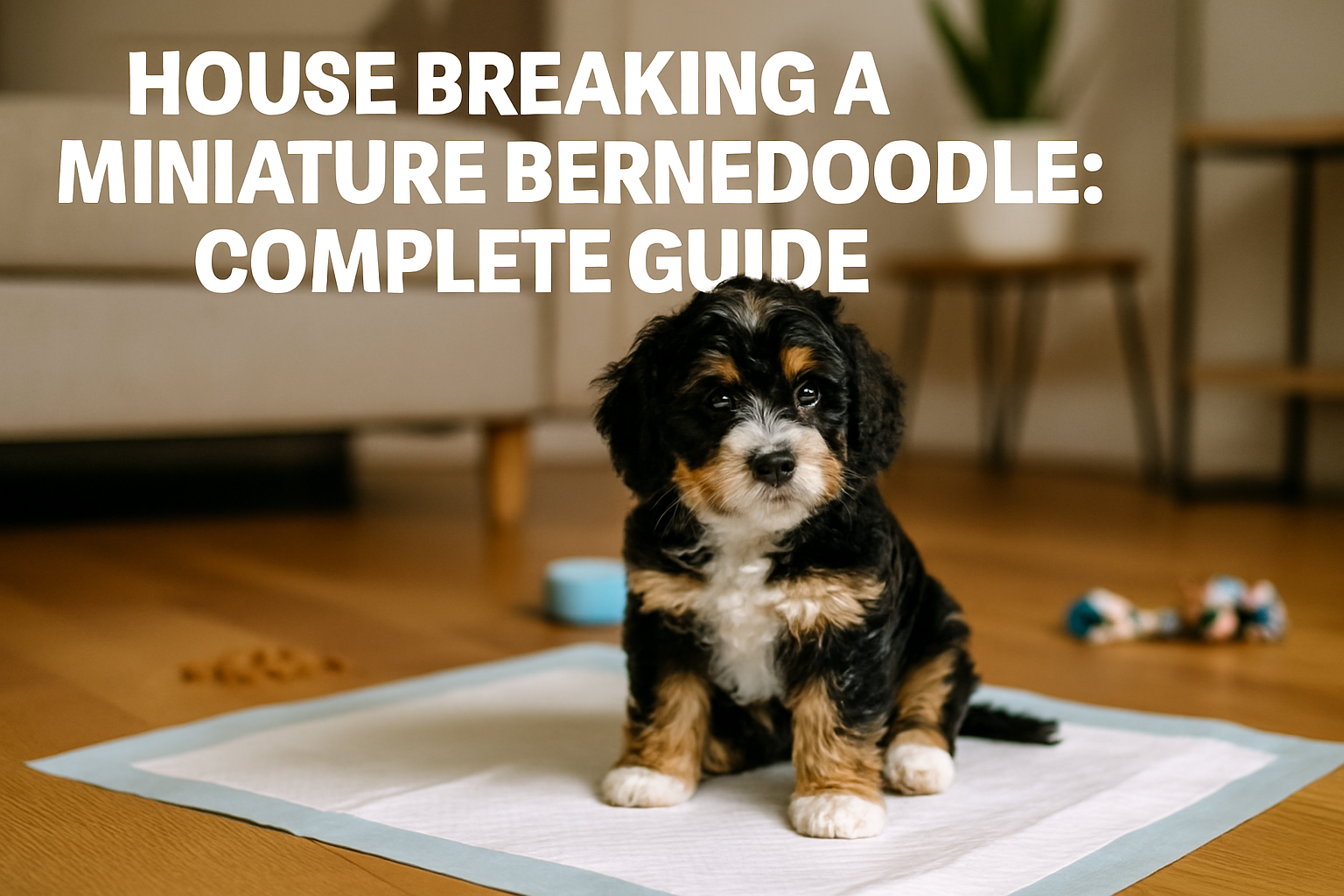
Picture this: you've just brought home the most adorable bundle of fluff – your new miniature Bernedoodle puppy. Those sweet eyes, that soft curly coat, and that irresistible puppy smell have completely stolen your heart. But then reality hits when you discover your first "surprise" on your favorite rug. 😅 Don't worry – house breaking a miniature bernedoodle doesn't have to be a nightmare! With the right approach, consistency, and a little patience, your furry friend will be house-trained faster than you think.
Key Takeaways
• Start early and stay consistent – Begin house training immediately when your mini Bernedoodle arrives home, typically around 8-10 weeks old
• Establish a routine – Regular feeding, potty breaks, and sleep schedules are crucial for successful house breaking
• Choose the right breeder – Well-started puppies from reputable breeders like Designer Doodles have a significant head start on house training
• Use positive reinforcement – Reward good behavior immediately and avoid punishment for accidents
• Be patient – Most mini Bernedoodles are fully house-trained between 4-6 months with consistent training
Understanding Your Miniature Bernedoodle's Unique Traits
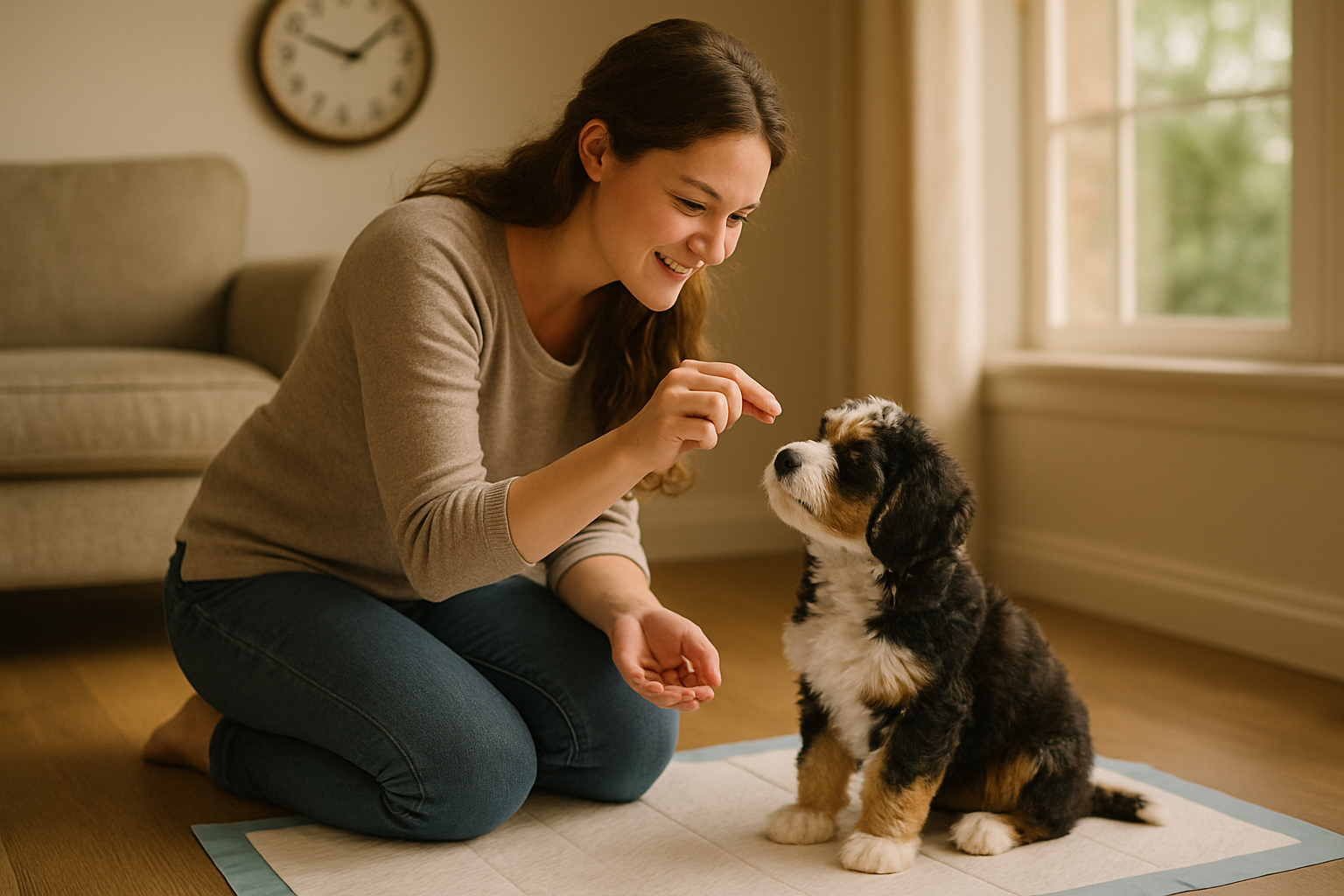
Before diving into house breaking a miniature bernedoodle, it's essential to understand what makes these adorable pups tick. Mini Bernedoodles are a delightful cross between a Bernese Mountain Dog and a Miniature Poodle, inheriting the best traits from both breeds. They're typically intelligent, eager to please, and highly trainable – all fantastic qualities for house training success!
Intelligence Advantage
The Poodle genetics in your mini Bernedoodle work in your favor when it comes to house training. Poodles are among the most intelligent dog breeds, ranking second in Stanley Coren's "The Intelligence of Dogs" [1]. This means your little one can:
- Learn routines quickly
- Understand cause and effect relationships
- Respond well to consistent training methods
- Pick up on your verbal and visual cues
Size Considerations
Miniature Bernedoodles typically weigh 25-49 pounds when fully grown, but as puppies, their small bladders mean more frequent potty breaks. A good rule of thumb: a puppy can "hold it" for about one hour per month of age, plus one. So a 3-month-old puppy needs potty breaks every 4 hours maximum.
Temperament Benefits
The gentle, people-pleasing nature inherited from both parent breeds makes mini Bernedoodles naturally inclined to want to make their humans happy. This trait is golden for house training because they genuinely want to do the right thing – they just need to learn what that is!
The Foundation: Choosing the Right Breeder for House Training Success
Here's something many new puppy parents don't realize: your house training journey actually begins before you even bring your puppy home. The breeder you choose plays a massive role in how smoothly your house breaking experience will go.
Why Designer Doodles Sets You Up for Success
As one of the premier mini bernedoodle breeders in the USA, Designer Doodles understands that early puppy development is crucial for house training success. When you're looking for mini bernedoodle puppies for sale, choosing a breeder who "well-starts" their puppies can save you weeks of training time.
What "Well-Started" Means
A well-started puppy from a quality breeder like Designer Doodles has already begun learning:
✅ Basic cleanliness habits – Puppies naturally avoid soiling their sleeping areas
✅ Surface preferences – Early exposure to grass, gravel, and other outdoor surfaces
✅ Routine recognition – Regular feeding and elimination schedules
✅ Human interaction – Positive associations with people during potty time
✅ Crate comfort – Understanding that the crate is a safe, clean space
The 8-Week Advantage
By 8 weeks old, well-started mini Bernedoodle puppies from Designer Doodles have typically:
- Spent time learning to eliminate away from their sleeping and eating areas
- Been introduced to outdoor potty surfaces
- Experienced consistent daily routines
- Received early socialization that builds confidence
This foundation means when you start house breaking a miniature bernedoodle from a quality breeder, you're not starting from zero – you're building on an already solid foundation.
Setting Up Your Home for House Training Success
Preparation is everything when it comes to house breaking a miniature bernedoodle. Before your puppy even steps paw into your home, you need to have your training setup ready to go.
Essential Supplies Checklist
🏠 Crate or playpen (sized appropriately – big enough to stand and turn around, not much bigger)
🏠 High-quality puppy pads (for backup, not primary training)
🏠 Enzymatic cleaner (crucial for accident cleanup)
🏠 Treats for rewards (small, high-value treats your puppy loves)
🏠 Leash for potty trips (even in your own yard initially)
🏠 Timer or phone app (to track potty schedules)
Creating Designated Zones
Your home should have clearly defined areas:
Safe Zone: Where your puppy can be when supervised
Sleep Zone: Crate or bed area that stays clean and comfortable
Potty Zone: The specific outdoor area where you want elimination to happen
Play Zone: Where active play and training occur
Puppy-Proofing for Success
Remove temptations and obstacles:
- Pick up rugs that might be mistaken for potty pads
- Block access to carpeted areas initially
- Ensure easy access to the door leading to the potty area
- Remove anything that might distract during potty trips
The key to successful house training toy poodle puppies and mini Bernedoodles alike is consistency in environment. Your puppy should always know where they're supposed to go and how to get there.
The Complete House Breaking Schedule
Consistency is the secret sauce for house breaking a miniature bernedoodle successfully. Your puppy thrives on routine, and a well-structured schedule sets both of you up for success.
Sample Daily Schedule for 8-12 Week Old Puppies
| Time | Activity | Notes |
|---|---|---|
| 6:00 AM | Wake up → Immediate potty trip | First thing, every single day |
| 6:15 AM | Breakfast | Consistent feeding time |
| 6:45 AM | Post-meal potty trip | Usually 15-30 minutes after eating |
| 7:00 AM | Play/training time | Supervised activity |
| 8:00 AM | Potty break | Before any nap |
| 8:15 AM | Nap time in crate | 1-2 hours |
| 10:00 AM | Wake up → Potty trip | Immediately upon waking |
| 12:00 PM | Lunch → Potty trip | Repeat morning routine |
| 3:00 PM | Afternoon potty break | Mid-day break |
| 5:00 PM | Dinner → Potty trip | Evening meal routine |
| 7:00 PM | Play time → Potty break | Before evening wind-down |
| 9:00 PM | Final potty trip | Last chance before bed |
| 10:00 PM | Bedtime in crate | Night routine |
Key Schedule Principles
🕐 Timing Triggers: Always take your puppy out:
- Immediately after waking up
- 15-30 minutes after eating
- After play sessions
- Before bedtime
- Every 1-2 hours during active periods
📱 Use Technology: Set phone alarms or use apps to maintain consistency, especially during the first few weeks.
👥 Family Coordination: Everyone in the household needs to follow the same schedule. Create a chart that tracks:
- Potty trip times
- Successful eliminations
- Accidents (time and location)
- Meal times
- Water intake
Adjusting for Your Puppy's Signals
While schedules are crucial, learning your mini Bernedoodle's individual signals is equally important. Watch for:
- Sniffing the ground intensely
- Circling or pacing
- Whining or scratching at doors
- Sudden restlessness during calm periods
- Going to previously soiled areas
"The most successful house training happens when you combine a consistent schedule with careful observation of your puppy's natural rhythms." – Professional Dog Trainer
Remember, young puppies have very little control over their bladders and bowels. Accidents will happen, and that's completely normal! The goal is to maximize opportunities for success while minimizing opportunities for mistakes.
Step-by-Step House Breaking Process
Now let's dive into the actual nuts and bolts of house breaking a miniature bernedoodle. This proven method works because it's based on your puppy's natural instincts and learning patterns.
Phase 1: Establishing the Routine (Weeks 8-10)
Week 1-2 Focus: Building basic understanding and preventing accidents
🎯 Primary Goals:
- Establish consistent potty location
- Create positive associations with outdoor elimination
- Minimize indoor accidents through supervision
Daily Actions:
- Take your puppy to the exact same outdoor spot every single time
- Use a consistent command like "Go potty" or "Do your business"
- Stay with your puppy until they eliminate (this might take 10-15 minutes initially)
- Reward immediately when they go in the right place with treats and enthusiastic praise
- Supervise constantly when indoors or use crate/playpen confinement
⚠️ Common Week 1 Mistakes:
- Letting the puppy wander the house unsupervised
- Taking them to different potty spots
- Coming inside too quickly if they don't go immediately
- Forgetting to reward successful outdoor elimination
Phase 2: Building Reliability (Weeks 10-14)
🎯 Primary Goals:
- Increase time between potty breaks gradually
- Strengthen the association between outdoor location and elimination
- Begin recognizing puppy's natural signals
New Strategies:
- Extend crate time gradually (but never beyond their physical limits)
- Introduce more house freedom in small increments
- Start teaching "wait" commands at the door
- Begin bell training if desired (hang bells by the door for puppy to ring)
Success Indicators:
✅ Puppy eliminates quickly when taken to potty spot
✅ Fewer accidents indoors (should be decreasing weekly)
✅ Puppy shows signs of holding it for longer periods
✅ Beginning to show signals when they need to go out
Phase 3: Gaining Independence (Weeks 14-20)
🎯 Primary Goals:
- Puppy begins to signal when they need to go out
- Longer periods between potty breaks
- More house freedom with continued success
Advanced Training:
- Teach door signals (scratching, sitting by door, ringing bells)
- Extend unsupervised time in small increments
- Practice "emergency holds" for short periods
- Introduce different weather conditions (rain, snow, etc.)
Learning about crate training routines for toy poodle puppies can provide additional insights that apply beautifully to mini Bernedoodles, as both breeds share similar intelligence levels and training responsiveness.
Phase 4: Mastery and Maintenance (Weeks 20+)
🎯 Primary Goals:
- Reliable signaling from puppy
- Ability to hold it for age-appropriate periods
- Consistent success in various situations
Maintenance Strategies:
- Continue consistent routine even after success
- Gradually increase freedom throughout the house
- Maintain positive reinforcement for outdoor elimination
- Stay vigilant during times of stress, excitement, or routine changes
Troubleshooting Common Challenges
🚨 Regression After Progress
Sometimes puppies seem to "forget" their training. Common causes:
- Changes in routine or environment
- Growth spurts affecting bladder control
- Medical issues (always rule out UTIs or other health problems)
- Inconsistent handling by family members
🚨 Refusing to Go Outside in Bad Weather
Mini Bernedoodles can be sensitive to weather. Solutions:
- Create covered potty areas
- Use positive reinforcement for brave weather behavior
- Gradually expose to different conditions
- Consider protective gear for extreme weather
🚨 Accidents in the Same Indoor Spot
This usually means inadequate cleanup. Steps:
- Use enzymatic cleaners specifically designed for pet odors
- Block access to the area temporarily
- Increase supervision in that area
- Consider placing food/water bowls in the spot temporarily (dogs won't eliminate where they eat)
Advanced Training Techniques and Troubleshooting
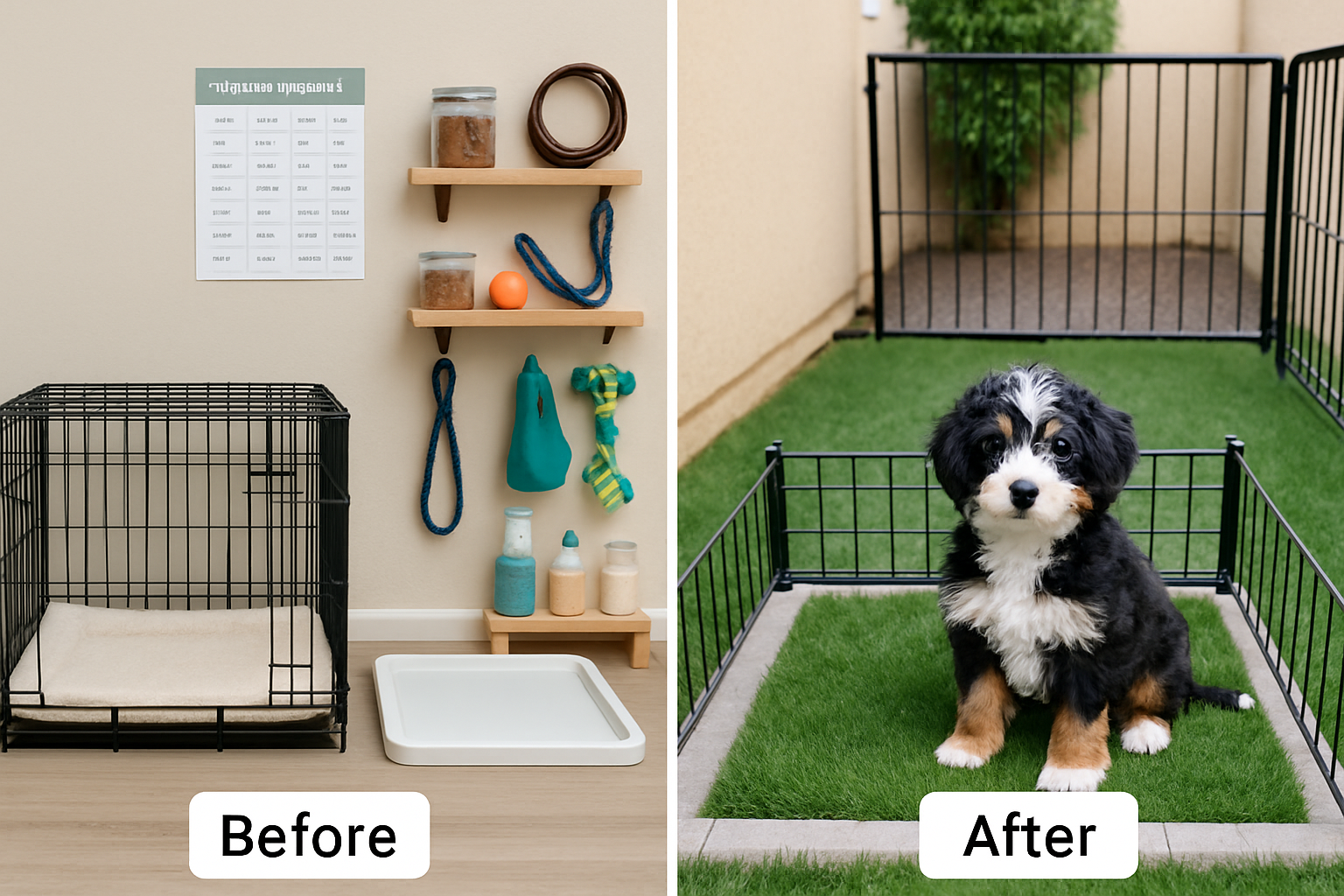
Once you've mastered the basics of house breaking a miniature bernedoodle, there are several advanced techniques that can accelerate your success and address specific challenges that might arise.
Bell Training for Communication
Bell training is an excellent way to give your mini Bernedoodle a clear way to communicate their needs. Here's how to implement it:
Setup:
- Hang bells on a string or ribbon by your main exit door
- Choose bells that make a distinct sound but aren't too loud
- Position them at your puppy's nose level
Training Process:
- Ring the bells yourself every time you take your puppy out
- Gently guide your puppy's nose or paw to ring the bells before opening the door
- Immediately open the door after the bell rings (even if you made it ring)
- Praise enthusiastically when your puppy eventually rings the bells independently
- Always follow through – if the bells ring, you go outside (even if it's a false alarm initially)
Timeline: Most mini Bernedoodles learn bell training within 2-3 weeks of consistent practice.
The "Emergency Hold" Training
Teaching your puppy to "hold it" for short periods during emergencies is crucial for real-world situations.
How to Practice:
- When you know your puppy needs to go out, ask them to "wait" for 30 seconds before opening the door
- Gradually increase the wait time to 1-2 minutes
- Always reward the wait with immediate potty trip and extra praise
- Practice during non-urgent times so it's not stressful
Weather-Proofing Your Training
Rainy Day Strategies:
- Create a covered outdoor area if possible
- Use umbrellas during potty trips to keep both of you dry
- Reward extra enthusiastically for brave weather behavior
- Have towels ready for quick drying when you come back in
Winter Considerations:
- Shovel a clear path and potty area
- Consider booties if your puppy's paws are sensitive to cold
- Shorten outdoor time but maintain the routine
- Watch for signs of being too cold (shivering, lifting paws)
Addressing Specific Problem Behaviors
Eating Poop (Coprophagia)
This disgusting but common behavior can interfere with house training:
- Clean up immediately after elimination
- Add pineapple or pumpkin to their diet (makes waste less appealing)
- Use "leave it" command training
- Ensure they're getting proper nutrition
Submissive Urination
Some sensitive mini Bernedoodles may urinate when excited or nervous:
- Keep greetings calm and low-key
- Avoid direct eye contact during greetings
- Let the puppy approach you rather than approaching them
- Clean accidents without fuss or attention
- Build confidence through positive training experiences
Marking Behavior
Even young puppies may start marking:
- Interrupt the behavior with a firm "no" and immediately go outside
- Increase supervision and decrease freedom temporarily
- Consider belly bands for male puppies during training
- Ensure complete cleanup of any marking spots
Multi-Dog Household Considerations
If you have other dogs, house breaking a miniature bernedoodle can be easier or more challenging, depending on your approach:
Advantages:
- Older, well-trained dogs can model good behavior
- Pack mentality can encourage following the routine
- Established potty areas are already in place
Challenges:
- Puppy may be distracted by other dogs during potty time
- Competition for attention during training
- Different schedules and needs
Best Practices:
- Take the puppy out alone for potty trips initially
- Ensure each dog gets individual attention and training
- Maintain separate feeding areas to control timing
- Don't rely solely on older dogs to teach the puppy
Understanding building daily routines for toy poodle puppies can provide additional structure ideas that work excellently for mini Bernedoodles due to their similar intelligence and eagerness to please.
Technology and Tools That Help
Monitoring Apps:
- PupPee – Track potty breaks, meals, and accidents
- Puppy Trainer – Set reminder alarms and track progress
- Dog Monitor – Watch your puppy when you're away
Helpful Gadgets:
- Pet cameras with two-way audio for monitoring and communication
- Automatic feeders for consistent meal timing
- Smart doorbells that alert you when your dog is at the door
- Indoor grass patches for emergency backup (use sparingly)
Creating Long-Term Success
Maintaining Good Habits:
Even after your mini Bernedoodle is fully house-trained, maintaining good habits ensures long-term success:
- Keep a consistent routine even on weekends and holidays
- Continue positive reinforcement occasionally for outdoor elimination
- Monitor for signs of stress or illness that might affect house training
- Prepare for life changes (moving, new baby, schedule changes) that might require refresher training
Building Confidence:
A confident puppy is easier to house train. Build confidence through:
- Positive training experiences in various situations
- Gradual exposure to new environments and situations
- Consistent, patient handling during the learning process
- Celebrating small victories along the way
The key to advanced house breaking success is adapting your approach to your individual puppy's personality, learning style, and specific challenges while maintaining the core principles of consistency, positive reinforcement, and patience.
Common Mistakes to Avoid and How to Fix Them
Even with the best intentions, many new puppy parents make mistakes that can slow down the house breaking process. Let's address the most common pitfalls and how to get back on track when house breaking a miniature bernedoodle.
Mistake #1: Inconsistent Schedule
The Problem: Family members taking the puppy out at different times, or skipping scheduled potty breaks because "they just went out."
Why It Hurts Progress: Puppies learn through repetition and routine. Inconsistency confuses them about when and where they should eliminate.
The Fix:
- Create a written schedule that everyone follows
- Set phone alarms for potty breaks
- Designate one person as the "schedule keeper" for the first few weeks
- Track successful trips and accidents to identify patterns
Real-Life Example: "I thought my puppy was regression, but I realized my teenager was sleeping through the morning alarm and skipping the 6 AM potty trip. Once we got back on schedule, accidents stopped within three days."
Mistake #2: Punishment for Accidents
The Problem: Scolding, rubbing the puppy's nose in accidents, or showing frustration when mistakes happen.
Why It Hurts Progress: Punishment teaches your puppy to hide when they need to eliminate, making house training much harder. It can also damage your relationship and create anxiety.
The Fix:
- Clean accidents calmly without any reaction toward your puppy
- If you catch them in the act, interrupt with a neutral "no" and immediately take them outside
- Focus 90% of your energy on rewarding success, not addressing failures
- Remember: accidents are YOUR failure to supervise, not your puppy's failure to learn
Mistake #3: Crate Size Errors
The Problem: Using a crate that's too big (puppy eliminates in one corner) or too small (puppy can't stand or turn around comfortably).
Why It Hurts Progress: Dogs naturally avoid soiling their sleeping area, but if the crate is too large, they can eliminate in one corner and sleep in another. If it's too small, it's uncomfortable and stressful.
The Fix:
- Proper sizing: Your puppy should be able to stand, turn around, and lie down, but not much more
- Use dividers in larger crates to adjust size as your puppy grows
- Monitor comfort: Your puppy should settle quickly and sleep peacefully in the crate
- Gradual increases: Expand crate space only after consistent success
Mistake #4: Free Feeding
The Problem: Leaving food out all day instead of scheduled meal times.
Why It Hurts Progress: You can't predict when your puppy will need to eliminate if you don't know when they've eaten.
The Fix:
- Scheduled meals: 2-3 times per day at consistent times
- Remove food: After 15-20 minutes, whether finished or not
- Track timing: Note when they eat and when they typically need to eliminate afterward
- Control water: Monitor water intake, especially before bedtime
Mistake #5: Inadequate Cleanup
The Problem: Using regular household cleaners instead of enzymatic cleaners, or not cleaning thoroughly enough.
Why It Hurts Progress: Dogs have incredibly sensitive noses. If they can smell previous accidents, they'll think that spot is an appropriate bathroom area.
The Fix:
- Use enzymatic cleaners specifically designed for pet odors
- Clean beyond the visible area – urine can spread under flooring
- Test hidden areas with a blacklight to find missed spots
- Block access to previously soiled areas until training is solid
Mistake #6: Rushing the Process
The Problem: Expecting too much too soon, or giving up on supervision before the puppy is truly reliable.
Why It Hurts Progress: House training takes time, and every puppy progresses at their own pace. Rushing leads to more accidents and frustration.
The Fix:
- Realistic expectations: Most puppies aren't fully reliable until 4-6 months old
- Gradual freedom: Increase unsupervised time slowly and only after consistent success
- Stay vigilant: Even after weeks of success, maintain awareness and routine
- Celebrate progress: Acknowledge improvements even if they're small
Mistake #7: Weather Excuses
The Problem: Skipping outdoor potty trips because of rain, cold, or other weather conditions.
Why It Hurts Progress: Inconsistency for any reason confuses your puppy and can lead to regression.
The Fix:
- Weather gear: Invest in umbrellas, puppy raincoats, or booties if needed
- Covered areas: Create or find covered outdoor spaces for elimination
- Quick trips: Make weather trips shorter but still maintain the routine
- Extra rewards: Give bonus treats and praise for brave weather behavior
Learning from others' experiences with house training toy and teacup poodle puppies can provide valuable insights, as these breeds share similar intelligence and training characteristics with mini Bernedoodles.
Mistake #8: Ignoring Health Issues
The Problem: Assuming frequent accidents or changes in elimination patterns are just training issues.
Why It Hurts Progress: Urinary tract infections, parasites, or other health problems can make house training impossible until treated.
The Fix:
- Veterinary checkup: Schedule a vet visit if accidents suddenly increase
- Track changes: Note any differences in frequency, urgency, or appearance of waste
- Rule out medical: Address health issues before assuming it's a training problem
- Communicate: Tell your vet about house training challenges during regular visits
Recovery Strategies When Things Go Wrong
If You've Made Multiple Mistakes:
- Reset completely: Go back to the most basic schedule and supervision level
- Clean everything: Do a thorough cleaning of your entire house with enzymatic cleaners
- Limit freedom: Return to crate training and constant supervision
- Stay positive: Focus on moving forward rather than dwelling on past mistakes
- Get help: Consider consulting a professional trainer if you're struggling
Signs You're Back on Track:
✅ Accidents decreasing week by week
✅ Puppy showing signs of wanting to go outside
✅ Successful elimination when taken to the designated spot
✅ Longer periods between potty breaks
✅ Puppy settling well in their crate
Remember, every puppy is different, and what works perfectly for one mini Bernedoodle might need adjustment for another. The key is staying flexible while maintaining core principles of consistency, positive reinforcement, and patience.
When to Seek Professional Help
Consider consulting a professional dog trainer or behaviorist if:
- Your puppy is over 6 months old and still having frequent accidents
- You're seeing regression after months of success
- Your puppy shows signs of anxiety or fear around elimination
- Multiple family members are struggling with consistency
- You're feeling overwhelmed or frustrated with the process
Professional trainers can provide personalized strategies and help identify specific issues that might be hindering your progress. Many offer virtual consultations, making expert help more accessible than ever.
Creating Long-Term Success and Maintenance
Successfully house breaking a miniature bernedoodle is just the beginning of your journey together. Creating long-term success means building habits and systems that will keep your furry friend reliable for years to come.
Establishing Lifetime Habits
Routine Maintenance
Even after your mini Bernedoodle is fully house-trained, maintaining some structure is crucial:
- Consistent morning and evening potty trips – These bookend the day and provide security
- Regular meal times – Continue scheduled feeding rather than free-feeding
- Periodic reinforcement – Occasionally reward outdoor elimination with treats or praise
- Weather preparedness – Maintain routines regardless of weather conditions
Adapting to Life Changes
Your mini Bernedoodle's house training will face various challenges throughout their life:
Moving to a New Home:
- Re-establish the potty area immediately
- Increase supervision for the first few weeks
- Use familiar commands and routines
- Be patient with temporary regression
Schedule Changes:
- Gradually adjust potty times rather than making sudden changes
- Maintain meal timing as much as possible
- Consider doggy daycare or pet sitters for major schedule shifts
- Communicate your dog's routine to anyone caring for them
Adding New Family Members:
- Maintain your dog's routine during exciting times
- Supervise extra carefully during periods of excitement or stress
- Include new family members in the established routine
- Watch for signs of attention-seeking accidents
Health Monitoring and House Training
Regular Veterinary Care
Annual checkups should include discussion of:
- Any changes in elimination patterns
- Urinary tract health
- Digestive health and regularity
- Age-related changes that might affect house training
Senior Dog Considerations
As your mini Bernedoodle ages, you may need to adjust expectations:
- More frequent potty breaks as bladder control may weaken
- Easier access to outdoor areas (ramps instead of stairs)
- Medical monitoring for conditions that affect elimination
- Patience with changes while maintaining basic expectations
Building on Your Success
Advanced Training Opportunities
Once house training is solid, you can build on this foundation:
- Travel training – Teaching your dog to eliminate in new locations
- Urban skills – City walking and appropriate elimination spots
- Emergency protocols – What to do during illness or extreme weather
- Communication refinement – More sophisticated signaling between you and your dog
The training principles you've learned while house breaking your miniature Bernedoodle apply to many other areas of dog training. Understanding creating a daily training schedule for toy poodles can help you expand your training success into other areas like obedience, tricks, and socialization.
Troubleshooting Long-Term Issues
Stress-Related Regression
Even well-trained dogs can have accidents during stressful times:
- Identify triggers (thunderstorms, fireworks, visitors)
- Increase supervision during known stressful periods
- Maintain routine as much as possible during changes
- Consider calming aids for anxiety-prone dogs
Medical-Related Changes
Watch for signs that accidents might be health-related:
- Sudden increase in frequency
- Changes in urine color or odor
- Straining or discomfort during elimination
- Drinking more or less water than usual
Seasonal Adjustments
Different seasons may require routine tweaks:
- Summer: Earlier morning trips to avoid heat
- Winter: Shorter but more frequent trips in extreme cold
- Spring/Fall: Adjusting to daylight changes
- Holiday seasons: Maintaining routine during celebrations
Sharing Your Success
Helping Other Puppy Parents
Your experience house breaking a miniature bernedoodle can help others:
- Share what worked best for your specific puppy
- Offer encouragement during difficult phases
- Connect with other mini Bernedoodle owners
- Consider fostering or volunteering with rescue organizations
Documenting Your Journey
Keep records of what worked for future reference:
- Photo timeline of your puppy's progress
- Schedule notes that were most effective
- Product recommendations for supplies that helped
- Milestone celebrations to remember the positive moments
The Bigger Picture: Building a Strong Relationship
House training is about much more than just preventing accidents in the house. It's one of the first major training challenges you and your mini Bernedoodle will tackle together, and it sets the foundation for:
Trust and Communication
- Your puppy learns to trust your guidance
- You learn to read your puppy's signals and needs
- Both of you develop a communication system that works
Routine and Structure
- Your puppy feels secure knowing what to expect
- You develop habits that benefit all areas of pet ownership
- Your household runs more smoothly with established patterns
Problem-Solving Skills
- You learn to troubleshoot challenges calmly and systematically
- Your puppy learns that good behavior leads to positive outcomes
- Both of you build confidence in handling new situations
Patience and Persistence
- You develop the patience needed for all dog training
- Your puppy learns that consistency is rewarding
- You both experience the satisfaction of achieving goals together
Looking Forward
As you complete the house training journey with your mini Bernedoodle, remember that this is just the beginning of a wonderful relationship. The patience, consistency, and positive reinforcement techniques that made house training successful will serve you well in all future training endeavors.
Whether you're teaching basic obedience, fun tricks, or addressing behavioral challenges, the foundation you've built during house training will make everything easier. Your mini Bernedoodle has learned to trust your guidance, and you've learned to communicate effectively with your furry friend.
Most importantly, you've proven to both yourself and your puppy that with patience, consistency, and love, you can overcome challenges together. That's a lesson that will benefit both of you for years to come.
Conclusion
House breaking a miniature bernedoodle doesn't have to be an overwhelming challenge. With the right foundation from a quality breeder like Designer Doodles, a consistent routine, positive reinforcement, and plenty of patience, your adorable mini Bernedoodle will master house training in just a few months.
Remember these key success factors:
🏆 Start with the right foundation – Choose a reputable breeder who well-starts their puppies
🏆 Establish and maintain consistency – Schedules, commands, and locations should remain the same
🏆 Focus on positive reinforcement – Reward success rather than punishing accidents
🏆 Be patient with the process – Every puppy learns at their own pace
🏆 Stay vigilant even after success – Maintain routines and watch for regression triggers
Your mini Bernedoodle's intelligence, eagerness to please, and loving nature make them naturally inclined to succeed at house training. By following the comprehensive guide outlined here, you're setting both of you up for a lifetime of success together.
Your Next Steps
- Establish your routine starting from day one with your new puppy
- Gather all necessary supplies before bringing your mini Bernedoodle home
- Stay consistent with schedules and commands throughout the training process
- Celebrate small victories along the way to keep motivation high
- Seek help when needed from professional trainers or your veterinarian
If you're still searching for the perfect mini Bernedoodle to join your family, consider the well-started puppies from Designer Doodles. Their commitment to early puppy development and socialization gives you a significant head start on house training success.
The journey of house breaking your miniature Bernedoodle is one of the first major milestones you'll achieve together. Embrace the process, stay patient during challenges, and enjoy watching your furry friend grow into a well-trained, beloved family member. Before you know it, those early house training days will be just a memory, replaced by years of joy with your perfectly house-trained companion! 🐾
References
[1] Coren, Stanley. "The Intelligence of Dogs: A Guide to the Thoughts, Emotions, and Inner Lives of Our Canine Companions." Free Press, 2006.
SEO Meta Information
Meta Title: House Breaking a Miniature Bernedoodle: Complete 2025 Guide
Meta Description: Master house breaking a miniature bernedoodle with our expert guide. Proven techniques, schedules & tips from Designer Doodles for fast success.