
The Complete Guide to Housebreaking Miniature Bernedoodle Puppy Success in 2025
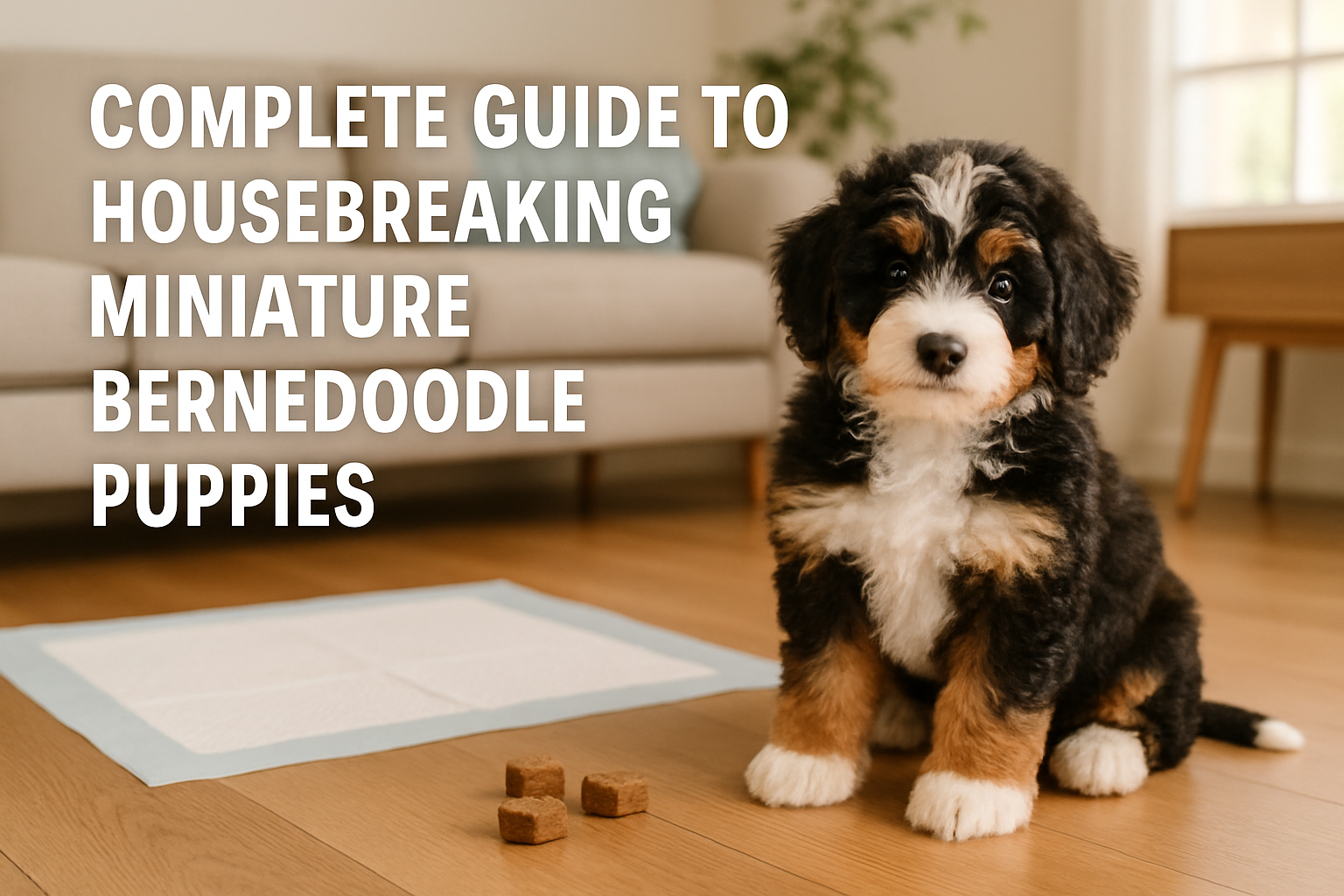
Picture this: you’ve just brought home the most adorable ball of fluff imaginable – your new miniature bernedoodle puppy. Those sweet eyes, that teddy bear face, and… oh no, is that a puddle on your favorite rug? 😅 Don’t worry, you’re not alone! Housebreaking miniature bernedoodle puppy challenges are completely normal, and with the right approach, you’ll have your furry friend potty-trained faster than you might think.
As someone who’s helped countless families navigate the exciting (and sometimes messy) world of puppy parenthood, I can tell you that miniature bernedoodles are actually fantastic candidates for house training. Their intelligence from the poodle side combined with the eager-to-please nature of the Bernese mountain dog makes them quick learners – when you know the right techniques.
Key Takeaways
• Start early and be consistent – Begin housebreaking your miniature bernedoodle puppy the moment they arrive home, maintaining the same schedule every single day
• Choose a reputable breeder who provides “well-started” puppies with early potty training foundations already in place
• Use positive reinforcement – Reward successful outdoor potty breaks immediately with treats, praise, and play time
• Establish a routine – Feed, water, and take your puppy outside at the same times daily to create predictable bathroom habits
• Be patient but persistent – Most miniature bernedoodles can be fully housetrained within 4-6 months with consistent effort
Understanding Your Miniature Bernedoodle’s Unique Housebreaking Needs
Why Miniature Bernedoodles Excel at House Training
When it comes to housebreaking miniature bernedoodle puppy success, you’re starting with some serious advantages. These designer dogs inherit the best traits from both parent breeds that actually make potty training easier than many other breeds.
Intelligence Factor: The poodle genetics bring exceptional intelligence and problem-solving abilities. Your mini bernedoodle puppy will quickly understand cause and effect – like “when I go potty outside, good things happen!” 🧠
People-Pleasing Nature: From their Bernese mountain dog heritage comes an intense desire to make their humans happy. This means your puppy will be motivated to learn what makes you smile and praise them.
Size Advantages: At 25-49 pounds when fully grown, miniature bernedoodles have better bladder control than tiny toy breeds but are still small enough to manage easily during training.
The Critical Role of Breeder Selection
Here’s something many new puppy parents don’t realize: housebreaking miniature bernedoodle puppy success often starts before you even bring your pup home. The breeder you choose makes a massive difference in how quickly and easily your puppy will housetrain.
What “Well-Started” Means: Top-quality breeders like Designer Golden Doodle Puppies begin basic potty training foundations as early as 4-5 weeks old. This includes:
- Teaching puppies to eliminate away from their sleeping/eating areas
- Introducing different surfaces for elimination
- Basic schedule establishment
- Early crate training introduction
- Positive associations with outdoor elimination
When you work with reputable mini bernedoodle breeders, you’re not starting from scratch. Your puppy arrives with crucial foundations already in place, cutting your training time significantly.
Designer Golden Doodle Puppies: America’s Premier Mini Bernedoodle Breeder
As the leading mini bernedoodle breeder in the USA, Designer Golden Doodle Puppies has perfected the art of producing well-started puppies that excel in house training. Their comprehensive early development program includes:
🏠 Pre-Housebreaking Foundation
- Puppies learn to eliminate on appropriate surfaces from 4 weeks old
- Introduction to outdoor elimination before 8 weeks
- Basic schedule establishment that you can continue at home
- Crate training foundations that support faster housebreaking
🧬 Superior Genetics
- Careful selection of parent dogs with stable, trainable temperaments
- Health testing ensures puppies have the physical capability for proper elimination control
- Breeding for intelligence and eagerness to please
📚 Owner Education
- Detailed housebreaking guides provided with every puppy
- Ongoing support during the critical first months
- Access to training resources and expert advice
When you choose mini bernedoodle puppies from Designer Golden Doodle Puppies, you’re investing in a head start that makes housebreaking miniature bernedoodle puppy challenges much more manageable.
Essential Housebreaking Miniature Bernedoodle Puppy Foundations
Setting Up for Success: The First 48 Hours
The moment you bring your miniature bernedoodle puppy home, the housebreaking clock starts ticking. Those first two days are absolutely critical for establishing the patterns that will determine your long-term success.
Immediate Schedule Implementation
Your puppy needs to go outside:
- Immediately upon waking up (including naps!)
- 15-30 minutes after eating or drinking
- Every 1-2 hours during active periods
- Right before bedtime
- Once during the night for puppies under 12 weeks
“Consistency in the first week prevents months of confusion later. Your puppy is looking for patterns – give them clear ones to follow!” – Professional Dog Trainer
Creating the Right Environment
| Indoor Setup | Outdoor Setup | Supplies Needed |
|---|---|---|
| Designated puppy area | Consistent elimination spot | High-value treats |
| Easy-clean flooring | Protected from distractions | Cleaning supplies |
| Crate or pen | Safe, fenced area | Leash and collar |
| Water/food stations | Weather protection | Timer or app |
The Power of Positive Reinforcement
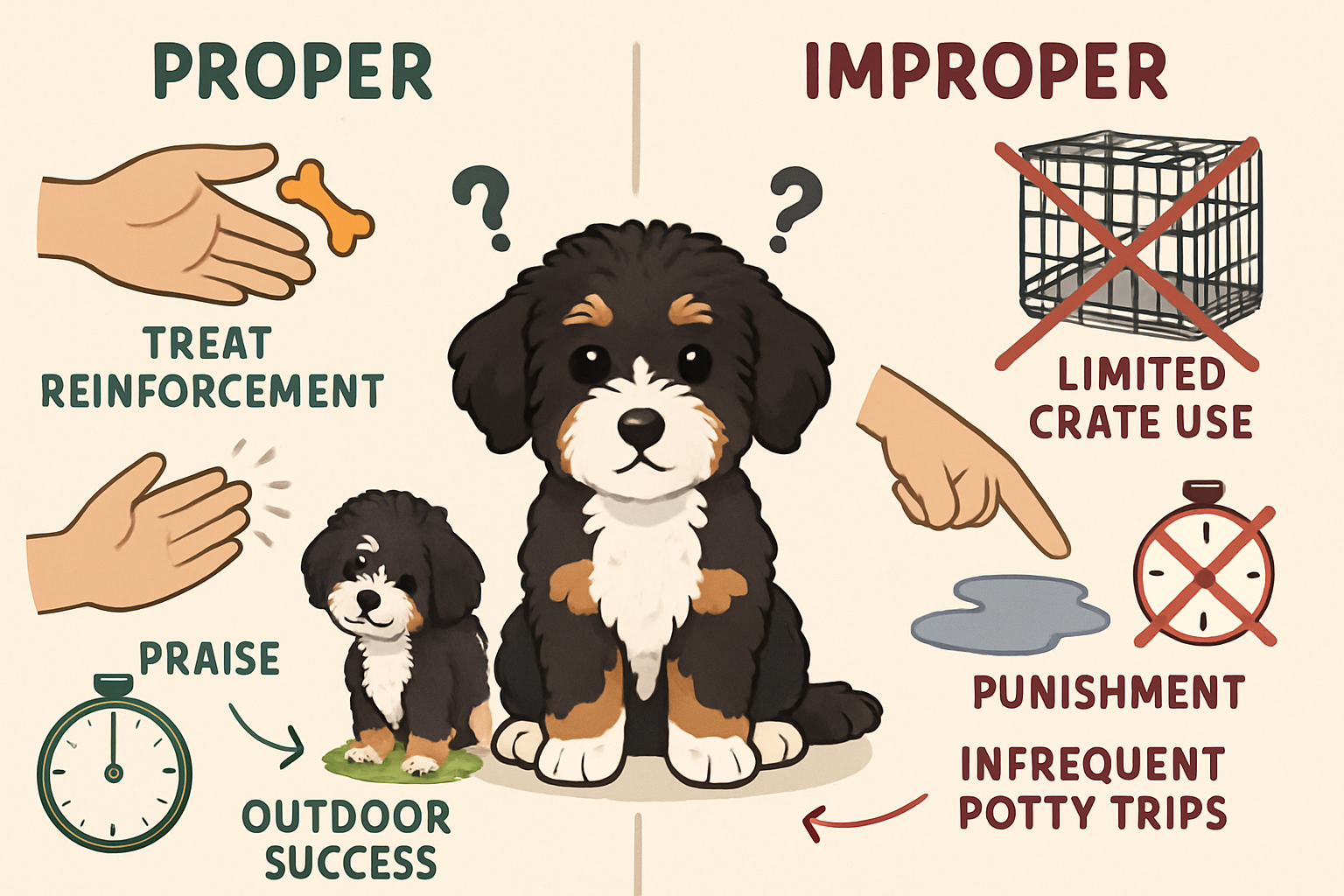
Housebreaking miniature bernedoodle puppy success depends heavily on making outdoor elimination the most rewarding experience possible. Here’s how to maximize your positive reinforcement:
Immediate Reward Protocol:
- The second your puppy finishes eliminating outside, say “Good potty!” in an excited voice
- Immediately give a high-value treat (small, soft, irresistible)
- Follow up with enthusiastic praise and brief play session
- Then allow supervised indoor time as a bonus reward
Treats That Work: Choose small, soft treats your puppy can eat quickly. Freeze-dried liver, small training treats, or even tiny pieces of cooked chicken work wonderfully.
Timing Is Everything: The reward must happen within 3 seconds of the behavior for maximum impact. Carry treats with you every single time you go outside.
Establishing Bulletproof Routines
Miniature bernedoodles thrive on predictability. When you establish rock-solid routines, your puppy’s body will naturally adjust to eliminate at the right times and places.
Sample Daily Schedule for 8-12 Week Old Puppies:
6:00 AM – Wake up, immediate outside trip
6:15 AM – Breakfast, then outside 20 minutes later
7:00 AM – Supervised play time
8:00 AM – Outside trip, then crate time
10:00 AM – Outside trip, supervised activity
12:00 PM – Lunch, then outside trip
1:00 PM – Nap time in crate
3:00 PM – Outside trip, play time
5:00 PM – Dinner, then outside trip
6:00 PM – Family time with frequent outside trips
9:00 PM – Final outside trip, bedtime routine
Pro Tips for Schedule Success:
- Set phone alarms for the first two weeks
- Keep a log to track patterns and accidents
- Adjust timing based on your puppy’s individual needs
- Gradually extend time between trips as your puppy matures
Understanding proper feeding schedules helps create predictable elimination patterns that support faster housebreaking success.
Crate Training: Your Secret Weapon
Crate training and housebreaking go hand-in-hand for miniature bernedoodles. When done correctly, the crate becomes your puppy’s safe space and a powerful tool for developing bladder control.
Crate Size Guidelines:
- Large enough for your puppy to stand, turn around, and lie down
- Not large enough to eliminate in one corner and sleep in another
- Use dividers to adjust size as your puppy grows
- Eventually accommodate adult size (30-36 inches for most mini bernedoodles)
Crate Training Schedule:
- Start with 15-30 minute periods for young puppies
- Gradually increase duration as bladder control improves
- Never exceed: puppy’s age in months + 1 hour (so 3-month-old = max 4 hours)
- Always provide an outside trip immediately before and after crating
Making the Crate Positive:
- Feed meals in the crate
- Provide special toys only available during crate time
- Never use the crate for punishment
- Cover partially to create a den-like atmosphere
For detailed guidance on crate training techniques, you’ll find additional resources that complement your housebreaking efforts perfectly.
Advanced Housebreaking Miniature Bernedoodle Puppy Techniques
Troubleshooting Common Challenges
Even with perfect preparation, housebreaking miniature bernedoodle puppy adventures come with their share of bumps in the road. Let’s tackle the most common issues and their solutions.
The “Almost There” Syndrome
Your puppy goes outside, sniffs around, comes back in, and immediately has an accident. Sound familiar? This happens because:
- Outdoor distractions are overwhelming their focus
- The elimination area doesn’t feel safe or comfortable
- Weather conditions are uncomfortable
- Your puppy hasn’t learned to “go on command” yet
Solutions:
- Choose a boring elimination area away from exciting distractions
- Stay outside longer – some puppies need 10-15 minutes to settle and eliminate
- Use a consistent verbal cue like “go potty” every time they eliminate
- Weather-proof your routine with covered areas or protective gear
Regression After Progress
It’s heartbreaking when your puppy seems to forget everything they’ve learned. Common causes include:
- Growth spurts affecting bladder control
- Schedule changes disrupting established routines
- Stress from new experiences or changes
- Medical issues like urinary tract infections
Recovery Strategies:
- Return to more frequent outside trips temporarily
- Increase supervision and reduce free-roaming time
- Reinforce basics with extra treats and praise
- Consult your vet if accidents suddenly increase
Reading Your Puppy’s Signals
Miniature bernedoodles are excellent communicators once you learn their language. Watch for these pre-elimination signals:
Physical Signs:
- Circling or spinning 🔄
- Sniffing the ground intensely
- Whining or restlessness
- Walking toward the door
- Sudden stopping during play
Behavioral Changes:
- Leaving the room or seeking privacy
- Scratching at doors or gates
- Looking directly at you (some puppies “ask” with eye contact)
- Returning to previous accident spots
Emergency Response Protocol:
- Interrupt gently with a calm “outside!”
- Immediately carry or lead puppy outdoors
- Wait patiently for elimination to occur
- Reward enthusiastically when successful
- Clean accidents thoroughly with enzymatic cleaner
Weather and Seasonal Considerations
Housebreaking miniature bernedoodle puppy success shouldn’t depend on perfect weather. Here’s how to maintain progress through all conditions:
Rainy Day Solutions:
- Covered outdoor areas like porches or gazebos
- Quick trips with umbrellas or rain gear
- Immediate indoor drying to keep the experience positive
- Extra rewards for brave rainy day potty trips
Winter Challenges:
- Paw protection with booties or paw balm
- Shorter but more frequent trips
- Clear pathways through snow to elimination areas
- Warm-up time indoors after cold weather trips
Summer Considerations:
- Early morning and evening trips during hot weather
- Shade and water available in elimination areas
- Paw protection from hot pavement
- Extended outdoor time when temperatures are comfortable
Advanced Training Techniques
Once your miniature bernedoodle masters basic housebreaking, you can add sophisticated elements that make life even easier.
Teaching “Go Potty” on Command:
- Say the cue right as your puppy begins eliminating
- Repeat consistently every single time
- Add the cue before elimination begins (after 2 weeks of step 1)
- Practice in different locations once mastered
- Maintain with occasional treats even after mastery
Multiple Surface Training:
- Grass (most common preference)
- Gravel or mulch (for apartment living)
- Concrete (for urban environments)
- Different textures to prevent surface fixation
Location Flexibility:
- Home base mastery first
- Gradual introduction of new elimination spots
- Consistent cues regardless of location
- Extra rewards for successful adaptation
Building these advanced skills creates a truly reliable, adaptable companion. For more insights into building daily routines that support long-term success, you’ll find additional strategies that complement your housebreaking program.
Maintaining Long-Term Success
Housebreaking miniature bernedoodle puppy isn’t just about the first few months – it’s about creating lifelong habits that serve both you and your dog.
Gradual Freedom Expansion:
- Week 1-2: Constant supervision or crating
- Week 3-4: Brief unsupervised periods in small areas
- Month 2-3: Expanded access to larger areas
- Month 4-6: Full house access with continued vigilance
- Month 6+: Trusted independence with maintained routines
Maintenance Strategies:
- Keep schedules consistent even after mastery
- Continue occasional rewards for outdoor elimination
- Monitor for changes that might affect habits
- Maintain clean elimination areas to encourage continued use
Signs of Complete Success:
- ✅ 7+ days without any indoor accidents
- ✅ Active seeking of outdoor elimination opportunities
- ✅ Reliable signaling when they need to go out
- ✅ Comfortable elimination in various appropriate locations
- ✅ Maintained habits despite schedule changes
The investment you make in thorough housebreaking miniature bernedoodle puppy training pays dividends for 12-15 years of companionship. When you start with well-bred mini bernedoodles for sale from Designer Golden Doodle Puppies, you’re setting the foundation for a lifetime of success.
Remember, every puppy progresses at their own pace. Some miniature bernedoodles master housebreaking in 8 weeks, while others need 4-6 months. The key is consistency, patience, and celebrating every small victory along the way. Your adorable, intelligent miniature bernedoodle wants to please you – give them clear guidance, and they’ll exceed your expectations! 🐾
For additional support during your housebreaking journey, explore resources on house training techniques that can be adapted for your miniature bernedoodle’s specific needs.
Conclusion
Housebreaking miniature bernedoodle puppy success is absolutely achievable when you combine the right foundation with consistent, positive training methods. Remember, you’re working with an incredibly intelligent and eager-to-please breed that actually wants to make you happy – your job is simply to show them how.
The three pillars of success are: choosing a reputable breeder who provides well-started puppies, establishing consistent routines from day one, and maintaining positive reinforcement throughout the process. When you start with mini bernedoodle puppies from Designer Golden Doodle Puppies, you’re already ahead of the game with puppies that have solid foundations in place.
Your Next Steps:
- Implement the schedule outlined in this guide starting immediately
- Gather your supplies – treats, cleaning products, and patience!
- Track your progress with a simple log to identify patterns
- Stay consistent even when progress seems slow
- Celebrate small wins – every successful outdoor trip matters!
Remember, accidents will happen, and that’s completely normal. What matters is how you respond and your commitment to the process. Most miniature bernedoodles achieve reliable house training within 4-6 months, and many reach success even sooner with dedicated effort.
Your adorable miniature bernedoodle is counting on you to provide clear guidance and endless patience. With the techniques in this guide and the head start that comes from choosing quality mini bernedoodles for sale from America’s premier breeder, you’re well-equipped for housebreaking success. Here’s to many years of accident-free living with your perfectly trained companion! 🎉
References
[1] American Kennel Club. (2025). “Housetraining Your Puppy: A Complete Guide.” AKC.org
[2] Association of Professional Dog Trainers. (2025). “Positive Reinforcement in Puppy Training.” APDT.com
[3] Veterinary Behaviorists International. (2025). “Elimination Behavior in Young Dogs.” VBI.org