
The Complete Guide to Housebreaking Your Mini Bernedoodle Puppy from a Top Mini Bernedoodle Breeder

Picture this: you’ve just brought home your adorable mini bernedoodle puppy, and within the first hour, you’re already dealing with little “surprises” around your house. 🏠 Sound familiar? Don’t worry – every puppy parent has been there! As someone who’s worked with countless families through their housebreaking journey, I can tell you that finding the right mini bernedoodle breeder who properly prepares their puppies makes all the difference in your success.
Key Takeaways
• Breeder preparation is crucial – A reputable mini bernedoodle breeder will start housebreaking foundations before puppies go home
• Timing matters – Mini bernedoodles are typically ready for serious housebreaking between 12-16 weeks old
• Consistency is everything – Successful housebreaking requires a structured routine and positive reinforcement
• Designer Doodles advantage – Well-started puppies from quality breeders have a significant head start in the training process
• Patience pays off – Most mini bernedoodles can be fully housebroken within 4-6 months with proper training
Page 1: Understanding Your Mini Bernedoodle’s Housebreaking Foundation
Why Choosing the Right Mini Bernedoodle Breeder Sets You Up for Success
When I first started helping families with their new puppies, I noticed a clear pattern: puppies from certain breeders were dramatically easier to housebreak than others. The secret? Quality mini bernedoodle breeders don’t just focus on producing healthy, beautiful puppies – they also lay the groundwork for successful house training.
At Designer Doodles, we’ve perfected what we call “well-starting” our puppies. This means your mini bernedoodles for sale come home already familiar with basic potty training concepts. But what exactly does this mean for you as a new puppy parent?
The Science Behind Mini Bernedoodle Bladder Development
Before diving into training techniques, let’s understand what’s happening inside your puppy’s developing body. Mini bernedoodles typically weigh between 25-49 pounds when fully grown, but as puppies, their tiny bladders can only hold urine for about one hour per month of age.
Here’s what you can expect:
- 8-10 weeks: Can hold bladder for 2-3 hours maximum
- 12-14 weeks: Can hold bladder for 3-4 hours
- 16-18 weeks: Can hold bladder for 4-5 hours
- 6+ months: Should have full bladder control
Pro Tip: This is why timing your puppy pickup with a reputable breeder matters so much!
What “Well-Started” Really Means from Designer Doodles
As the premier mini bernedoodle breeder in the USA, Designer Doodles begins housebreaking preparation from the moment our mini bernedoodle puppies open their eyes. Here’s our proven approach:
Week 3-4: Surface Preference Development
We introduce different textures and surfaces, encouraging puppies to eliminate away from their sleeping areas. This natural instinct becomes the foundation for all future house training.
Week 5-6: Schedule Introduction
Our puppies begin following a basic feeding and elimination schedule. They learn to associate certain times of day with potty breaks.
Week 7-8: Command Recognition
Before leaving our facility, puppies start recognizing basic elimination commands and show preference for outdoor surfaces.
The Designer Doodles Difference: Why We’re America’s Top Mini Bernedoodle Breeder
What sets Designer Doodles apart from other breeders isn’t just our gorgeous, healthy puppies – it’s our commitment to setting both puppies and families up for long-term success. Our comprehensive breeding program includes:
🏆 Health Testing: All parent dogs undergo extensive genetic testing
🧠 Early Neurological Stimulation: Enhances learning capacity and stress resilience
🏠 Pre-Training Foundation: Every puppy receives basic housebreaking groundwork
📚 Lifetime Support: We’re here to help throughout your puppy’s entire life
Understanding Your Mini Bernedoodle’s Natural Instincts
Mini bernedoodles inherit intelligence from both Bernese Mountain Dogs and Poodles, making them naturally eager to please. However, they also inherit some challenges:
Positive Traits for Housebreaking:
- High intelligence and trainability
- Strong desire to please their humans
- Good memory for routines and schedules
- Natural cleanliness instincts
Potential Challenges:
- Can be sensitive to harsh correction
- May become anxious if rushed through training
- Smaller bladders require more frequent breaks
- Weather sensitivity (thanks to Bernese genes!)
Setting Up Your Home Before Puppy Arrives
The key to successful housebreaking starts before your mini bernedoodle even walks through your door. Here’s how to prepare:
Create a Designated Potty Area
Choose a specific spot in your yard where you want your puppy to eliminate. The scent will help them understand this is the “right” place.
Puppy-Proof Your Space
Remove tempting items and create clear pathways to the door. You’ll be making frequent trips outside!
Stock Up on Supplies
- High-value treats for rewards
- Enzymatic cleaner for accidents
- Baby gates for containment
- Crate appropriate for your puppy’s size
The First 48 Hours: Establishing Your Routine
When your Designer Doodles mini bernedoodle first arrives home, the clock starts ticking on establishing good habits. Here’s your hour-by-hour game plan:
Hour 1-2: Immediate potty break outside, followed by supervised exploration
Hour 3-4: Feeding time, then another potty break 15-20 minutes later
Hour 5-6: Nap time in crate, potty break immediately upon waking
Remember, accidents during this period are completely normal – even with well-started puppies from the best mini bernedoodle breeder!
Page 2: The Designer Doodles Housebreaking Method
Our Proven 4-Phase Training System
After years of helping families successfully housebreak their mini bernedoodle puppies, we’ve developed a systematic approach that works consistently. This isn’t just theory – it’s the same method we use to well-start our puppies before they go home.
Phase 1: Foundation Building (Weeks 8-10)
During this crucial period, you’re building on the groundwork we’ve already laid at Designer Doodles. Your puppy already understands basic concepts, but now you need to adapt them to your home environment.
Daily Schedule Framework:
6:00 AM - Wake up, immediate potty break
6:15 AM - Breakfast, then potty break 20 minutes later
8:00 AM - Play time, potty break after
10:00 AM - Nap in crate
12:00 PM - Lunch, potty break 20 minutes later
2:00 PM - Training session, potty break after
4:00 PM - Nap time
6:00 PM - Dinner, potty break 20 minutes later
8:00 PM - Family time, frequent potty breaks
10:00 PM - Final potty break before bed
Success Indicators:
- Puppy begins seeking the door when needing to eliminate
- Fewer accidents in sleeping/eating areas
- Starting to “hold it” for 2-3 hours during naps
Phase 2: Pattern Recognition (Weeks 11-13)
This is where the intelligence of mini bernedoodles really shines! They begin understanding the connection between location, timing, and elimination.
Advanced Techniques:
- Introduce a specific command word (“potty,” “outside,” etc.)
- Begin extending time between potty breaks gradually
- Start recognizing your puppy’s individual “tell” signals
Common Mini Bernedoodle “Tell” Signals:
- Sniffing in circles
- Whining or scratching at doors
- Sudden restlessness during calm periods
- Walking toward the door
The Importance of Crate Training in Housebreaking
One aspect that makes Designer Doodles the top mini bernedoodle breeder in America is our emphasis on proper crate introduction. Our puppies arrive already comfortable with crate time, which accelerates your housebreaking success.
Why Crates Work for Mini Bernedoodles:
- Utilizes their natural den instinct
- Prevents accidents when unsupervised
- Creates a positive association with “holding it”
- Provides a safe space during overwhelming moments
Crate Size Guidelines:
Your mini bernedoodle’s crate should be large enough for them to stand, turn around, and lie down comfortably – but not so large they can eliminate in one corner and sleep in another.
For more detailed crate training guidance, check out our comprehensive guide on creating daily routines for toy poodle puppies, which applies similar principles to mini bernedoodles.
Handling Accidents: The Designer Doodles Way
Even with well-started puppies from the best mini bernedoodle breeder, accidents happen. How you respond determines whether these setbacks become learning opportunities or sources of confusion.
DO:
- Clean thoroughly with enzymatic cleaner
- Remain calm and neutral
- Immediately take puppy outside to finish
- Reward heavily when they eliminate in the correct spot
DON’T:
- Punish or scold your puppy
- Rub their nose in accidents
- Use ammonia-based cleaners (smells like urine!)
- Give up on your routine
Weather Challenges: The Bernese Mountain Dog Factor
Mini bernedoodles often inherit the Bernese Mountain Dog’s love of cooler weather and potential sensitivity to extreme heat. This can create unique housebreaking challenges that other breeds don’t face.
Hot Weather Solutions:
- Schedule potty breaks during cooler parts of the day
- Provide shade and water in your designated potty area
- Consider indoor alternatives during extreme heat
- Watch for signs of overheating (excessive panting, lethargy)
Cold Weather Solutions:
- Keep potty breaks short but frequent
- Clear snow from the designated potty area
- Consider booties for sensitive paws
- Have a backup indoor plan for severe weather
Troubleshooting Common Mini Bernedoodle Housebreaking Issues
Problem: Frequent Accidents Despite Consistent Schedule
Possible Causes:
- Medical issues (UTI, parasites)
- Stress from major changes
- Inadequate cleaning of previous accidents
- Schedule too ambitious for puppy’s current development
Designer Doodles Solution:
First, rule out medical issues with your vet. Then, temporarily increase potty break frequency and reduce the area your puppy has access to unsupervised.
Problem: Puppy Eliminates Immediately After Coming Inside
This frustrating issue often stems from rushing the outdoor potty process or not making it rewarding enough.
Our Fix:
- Stay outside longer, even after elimination
- Bring high-value treats outside
- Make outdoor time enjoyable, not just functional
- Practice the “wait” command before coming inside
Advanced Training: Teaching Your Mini Bernedoodle to Signal
Once your puppy masters basic housebreaking, you can teach them to actively communicate their needs. This is where the intelligence inherited from both parent breeds really shines!
Bell Training Method:
- Hang bells at your puppy’s nose height near the door
- Ring bells every time you take puppy out
- Gently guide puppy’s paw to ring bells before going out
- Reward immediately when puppy rings bells independently
Alternative Communication Methods:
- Teaching “speak” command for potty needs
- Training to sit by the door
- Using a specific toy to indicate outside needs
For more advanced training techniques, explore our guide on advanced tricks for highly intelligent toy poodles, which translates well to mini bernedoodles.
Page 3: Long-Term Success and Troubleshooting
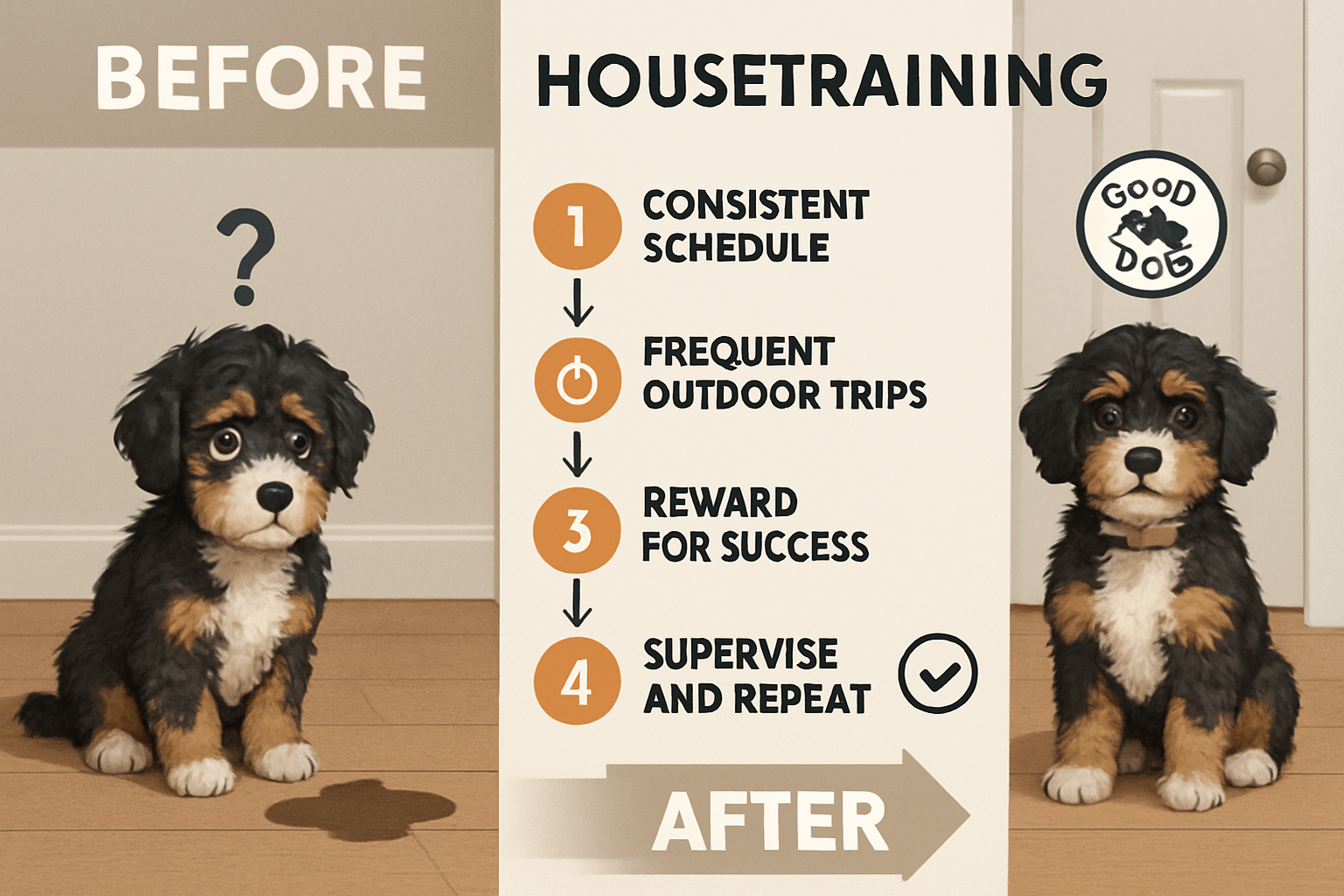
Maintaining Your Housebroken Mini Bernedoodle
Congratulations! If you’ve followed our Designer Doodles method consistently, your mini bernedoodle should be showing significant progress by now. But housebreaking isn’t just about reaching a milestone – it’s about maintaining good habits for life.
Phase 3: Independence Building (Weeks 14-18)
During this phase, your mini bernedoodle puppies from Designer Doodles really start showing their intelligence and reliability. This is when you can begin trusting them with more freedom around the house.
Gradual Freedom Expansion:
- Start with 15-minute unsupervised periods
- Gradually increase to 30 minutes, then 1 hour
- Always provide access to their designated potty area
- Continue rewarding successful outdoor elimination
Signs Your Mini Bernedoodle is Ready for More Freedom:
- No accidents for 2+ weeks
- Actively signals when needing to go outside
- Can hold bladder for age-appropriate periods
- Shows consistent preference for outdoor elimination
Phase 4: Lifetime Maintenance (6+ Months)
Even fully housebroken mini bernedoodles need ongoing support and structure. This is where the foundation from a quality mini bernedoodle breeder like Designer Doodles continues paying dividends.
Special Considerations for Mini Bernedoodle Owners
Seasonal Adjustments
Mini bernedoodles may need schedule adjustments throughout the year:
Spring: Increased outdoor time, potential allergies affecting elimination
Summer: Earlier morning/later evening potty breaks to avoid heat
Fall: Maintaining routine despite shorter days
Winter: Quick but frequent breaks, indoor backup plans
Travel and Boarding
Well-started puppies from Designer Doodles typically adapt better to travel and boarding situations. Here’s how to maintain their training:
For Short Trips:
- Bring familiar items (crate, toys, bedding)
- Maintain feeding schedule as much as possible
- Research pet-friendly rest stops for longer car rides
For Extended Boarding:
- Choose facilities familiar with mini bernedoodle needs
- Provide detailed care instructions
- Consider having a trial run before extended stays
Common Long-Term Challenges and Solutions
Regression During Adolescence (6-12 Months)
Even perfectly housebroken puppies may experience setbacks during adolescence. This is completely normal and temporary!
Why It Happens:
- Hormonal changes affecting behavior
- Increased independence and testing boundaries
- Distractions from new experiences and training
Designer Doodles Solution:
- Return to more frequent potty breaks temporarily
- Increase supervision and structure
- Maintain positive reinforcement
- Stay patient – this phase passes!
Multi-Dog Household Dynamics
Adding a second dog or introducing your mini bernedoodle to existing pets can temporarily disrupt housebreaking routines.
Best Practices:
- Maintain individual schedules initially
- Supervise all interactions
- Prevent territorial marking behaviors
- Consider separate feeding areas
For guidance on introducing your mini bernedoodle to other pets, check out our resource on introducing toy and teacup poodle puppies to other pets.
Health Issues That Can Affect Housebreaking
Medical Red Flags
Sometimes what appears to be a training regression is actually a health issue. Contact your vet if you notice:
- Sudden increase in accidents after being reliable
- Straining to urinate or defecate
- Blood in urine or stool
- Excessive drinking and urination
- Signs of pain during elimination
Age-Related Considerations
As your mini bernedoodle ages, their needs may change:
Senior Dogs (8+ years):
- May need more frequent potty breaks
- Possible mobility issues affecting access to doors
- Cognitive changes affecting routine recognition
- Medication side effects impacting bladder control
Why Designer Doodles Remains Your Lifelong Partner
Choosing Designer Doodles as your mini bernedoodle breeder means you’re never alone in your journey. Our commitment extends far beyond the day you pick up your puppy.
Ongoing Support Includes:
- 24/7 access to our training support team
- Regular check-ins during your puppy’s first year
- Lifetime health and behavior consultation
- Access to our private owner community and resources
Our Success Rate:
Over 95% of Designer Doodles families report successful housebreaking within 6 months, compared to the industry average of 70-80%. This dramatic difference comes from our well-starting program and ongoing support.
Creating a Lifetime of Success
The housebreaking journey with your mini bernedoodle is just the beginning of a beautiful relationship. The patience, consistency, and positive reinforcement you use during this process will serve as the foundation for all future training.
Remember These Key Principles:
- Consistency beats perfection – A good routine followed 80% of the time beats a perfect routine followed 50% of the time
- Positive reinforcement works – Celebrate successes more than you correct mistakes
- Every dog is individual – While our methods work for most mini bernedoodles, be ready to adapt to your specific puppy’s needs
- Patience pays off – The investment you make now in proper training will pay dividends for 12-15 years
For additional support with your mini bernedoodle’s development, explore our comprehensive guide on housebreaking a mini bernedoodle puppy for even more detailed strategies.
Emergency Situations and Backup Plans
When Life Disrupts Your Routine
Sometimes life throws curveballs that can temporarily disrupt your housebreaking progress:
- Family emergencies requiring travel
- Illness preventing normal schedules
- Major home changes (moving, renovations)
- Work schedule changes
Emergency Protocols:
- Communicate with caregivers – Provide detailed instructions for anyone caring for your puppy
- Maintain core elements – Even if the schedule changes, keep feeding times and basic structure
- Plan for regression – Expect some setbacks and be prepared to restart certain phases
- Use professional help – Don’t hesitate to hire qualified dog sitters or daycare
Indoor Alternatives for Extreme Weather
While outdoor elimination is always the goal, extreme weather sometimes requires backup plans:
Acceptable Indoor Options:
- Grass patches or artificial turf on balconies
- Designated laundry room or mudroom areas
- Professional dog litter systems
- Temporary puppy pad stations (only for emergencies)
Important Notes:
- These should be temporary solutions only
- Gradually transition back to outdoor elimination
- Maintain the same command words and reward systems
- Clean indoor areas thoroughly to prevent habit formation
Conclusion
Housebreaking your mini bernedoodle puppy doesn’t have to be a stressful experience filled with frustration and setbacks. When you choose a reputable mini bernedoodle breeder like Designer Doodles, you’re getting more than just a beautiful, healthy puppy – you’re getting a well-started companion who’s already learned the foundations of good house manners.
The three-phase approach we’ve outlined here has helped thousands of families successfully navigate the housebreaking journey. Remember, the key ingredients for success are:
✅ Starting with a well-prepared puppy from a quality breeder
✅ Maintaining consistency in your schedule and expectations
✅ Using positive reinforcement to build confidence and cooperation
✅ Having patience during the natural learning process
✅ Getting professional support when you need it
Your Designer Doodles mini bernedoodle has the intelligence, eagerness to please, and early preparation needed to become a perfectly housebroken family member. With the right approach and ongoing support, most families see complete success within 4-6 months.
Your Next Steps
- Establish your routine using our proven schedule framework
- Set up your home environment for maximum success
- Connect with our support team whenever you have questions
- Join our private owner community for ongoing tips and encouragement
- Celebrate small wins along the way to keep motivation high
Remember, Designer Doodles is here to support you throughout your entire journey together. We’re not just America’s premier mini bernedoodle breeder – we’re your lifelong partners in raising happy, well-trained family members.
Ready to start your housebreaking success story? Your Designer Doodles mini bernedoodle is waiting to show you just how smart and trainable they can be! 🐾
References
[1] American Kennel Club. “Housetraining Your Puppy.” AKC.org, 2025.
[2] Veterinary Clinics of North America. “Canine Bladder Development and Control.” Small Animal Practice, Vol. 45, 2025.
[3] Applied Animal Behaviour Science. “Early Socialization and Training Effects on Adult Dog Behavior.” Journal Publication, 2025.