
The Complete Guide to Housebreaking Your Mini Bernedoodle Puppy: Expert Tips from Designer Doodles

Picture this: you’ve just brought home the most adorable, fluffy mini bernedoodle puppy, and within the first hour, they’ve already had three accidents on your favorite rug. Sound familiar? 🐾 Don’t worry – you’re not alone, and more importantly, you’re not stuck with this situation forever! When searching for mini bernedoodle puppies for sale, one of the most crucial factors to consider is finding a breeder who provides a solid foundation for housebreaking success.
As one of America’s premier mini bernedoodle breeders, Designer Doodles understands that successful housebreaking starts long before your puppy comes home. The difference between a frustrating few months and a smooth transition often comes down to the early foundation work done by experienced breeders and the techniques you implement from day one.
Key Takeaways
• Early foundation matters: Choose a reputable breeder like Designer Doodles who “well-starts” their mini bernedoodle puppies with preliminary housebreaking protocols
• Consistency is king: Establishing and maintaining a strict routine is the fastest path to housebreaking success
• Patience pays off: Most mini bernedoodle puppies can be fully housebroken within 4-6 months with proper techniques
• Crate training accelerates progress: When done correctly, crate training becomes your most powerful housebreaking tool
• Prevention beats correction: Anticipating accidents and preventing them is more effective than cleaning up after mistakes
Page 1: Foundation and Early Training (Weeks 8-12)
Why Breeder Selection Impacts Housebreaking Success
When you’re looking at mini bernedoodles for sale, the breeder’s approach to early puppy development can make or break your housebreaking experience. At Designer Doodles, we’ve established ourselves as the best mini bernedoodle breeder in the USA by implementing comprehensive “well-starting” protocols that give your puppy a significant head start.
What does “well-starting” mean? It’s our systematic approach to:
- Introducing puppies to different surfaces for elimination
- Establishing basic routine awareness
- Building bladder and bowel control through structured feeding
- Creating positive associations with designated potty areas
- Developing early crate comfort and den instincts
“The first 8 weeks of a puppy’s life set the foundation for everything that follows. Our well-started mini bernedoodle puppies arrive home with preliminary understanding of where and when to eliminate, making your job significantly easier.” – Designer Doodles Training Team
Understanding Your Mini Bernedoodle’s Natural Instincts
Mini bernedoodles inherit intelligence from both Bernese Mountain Dogs and Poodles, making them naturally eager to please and quick learners. However, their small size means smaller bladders and more frequent elimination needs during puppyhood.
Key biological factors to remember:
- Bladder capacity: A 10-week-old mini bernedoodle can typically “hold it” for about 2-3 hours maximum
- Elimination triggers: Eating, drinking, playing, waking up, and excitement all trigger the need to eliminate
- Learning timeline: Most mini bernedoodles show significant progress by 12-14 weeks and achieve consistency by 16-20 weeks
Setting Up Your Home for Success
Before your mini bernedoodle puppy arrives, proper preparation prevents most common housebreaking challenges:
Essential supplies checklist:
✅ Appropriately sized crate (just large enough to stand, turn around, and lie down)
✅ High-quality training pads for backup situations
✅ Enzymatic cleaner for accident cleanup
✅ Consistent food and water bowls
✅ Designated outdoor potty area
✅ Leash for potty trips
✅ High-value treats for positive reinforcement
Room setup strategy:
- Confine the space: Start with one room or a sectioned area
- Remove temptations: Pick up rugs, shoes, and anything absorbent
- Create clear zones: Sleeping area, eating area, and play space should be distinct
- Easy cleanup surfaces: Hard floors are your friend during the training phase
The First Week Home: Establishing Routine
The moment your mini bernedoodle puppy crosses your threshold, the housebreaking clock starts ticking. Here’s your hour-by-hour game plan for the first week:
Daily schedule template:
- 6:00 AM: Wake up, immediate potty trip outside
- 6:15 AM: Breakfast (measured portion)
- 6:45 AM: Post-meal potty trip
- 7:00 AM: Supervised play time
- 8:00 AM: Crate time/nap
- 10:00 AM: Potty trip, play, water
- 11:00 AM: Crate time
- 12:00 PM: Lunch and potty routine
- 1:00 PM: Play and training session
- 2:00 PM: Crate time/nap
- 4:00 PM: Potty trip, play
- 5:00 PM: Dinner
- 5:30 PM: Post-meal potty trip
- 6:00 PM: Family time (supervised)
- 8:00 PM: Final potty trip
- 8:30 PM: Crate for the night
Pro tip: Set phone alarms for the first two weeks to maintain consistency, even when life gets busy!
Reading Your Puppy’s Signals
Mini bernedoodles are excellent communicators once you learn their language. Watch for these pre-elimination behaviors:
Obvious signals:
- Circling or spinning
- Sniffing the ground intensely
- Whining or pawing at doors
- Sudden restlessness during calm periods
- Squatting position
Subtle signals:
- Brief pause during play
- Looking toward the door
- Moving away from the group
- Slight change in facial expression
- Increased sniffing behavior
The key is interrupting these behaviors with a cheerful “Outside!” and immediately taking them to their designated potty area.
Positive Reinforcement Techniques
Designer Doodles puppies respond exceptionally well to positive reinforcement because of their intelligent, people-pleasing nature. Here’s how to maximize your success:
The “Potty Party” method:
- The moment they finish eliminating outside, start celebrating
- Use high-value treats (small, soft, irresistible)
- Verbal praise with excitement: “Good potty! Yes!”
- Physical affection (if your puppy enjoys it)
- Immediate reward – don’t wait until you’re back inside
Timing is everything: The reward must happen within 3 seconds of the behavior for maximum impact.
Common First-Week Mistakes to Avoid
Even with the best intentions, new mini bernedoodle owners often make these critical errors:
❌ Punishment for accidents: Never scold, rub their nose in it, or show anger
❌ Inconsistent schedule: Varying meal times leads to unpredictable elimination
❌ Too much freedom: Unsupervised access to the house guarantees accidents
❌ Wrong crate size: Too large allows elimination in one corner
❌ Inadequate cleanup: Regular cleaners don’t eliminate odor that attracts repeat accidents
❌ Giving up too quickly: Progress isn’t always linear – expect some setbacks
Troubleshooting Week One Challenges
Challenge: Puppy cries in crate at night
Solution: Ensure final potty trip was recent, crate is comfortable but not too large, and consider moving crate closer to your bedroom initially
Challenge: Frequent accidents despite regular potty trips
Solution: Increase frequency of trips, ensure complete elimination outside, and check for potential medical issues
Challenge: Puppy seems to “forget” training
Solution: Return to more frequent supervision, smaller confined space, and increased reward frequency
For additional guidance on preparing your home for a toy poodle puppy, many of the same principles apply to mini bernedoodles.
Page 2: Advanced Training Techniques (Weeks 12-16)
Transitioning from Survival Mode to Mastery
By week 12, your mini bernedoodle should be settling into their routine, and you’re probably seeing encouraging signs of progress. This is when we shift from basic accident prevention to building reliable, long-term habits. Designer Doodles’ well-started mini bernedoodle puppies typically show remarkable progress during this phase due to their strong foundation.
Crate Training: Your Secret Weapon
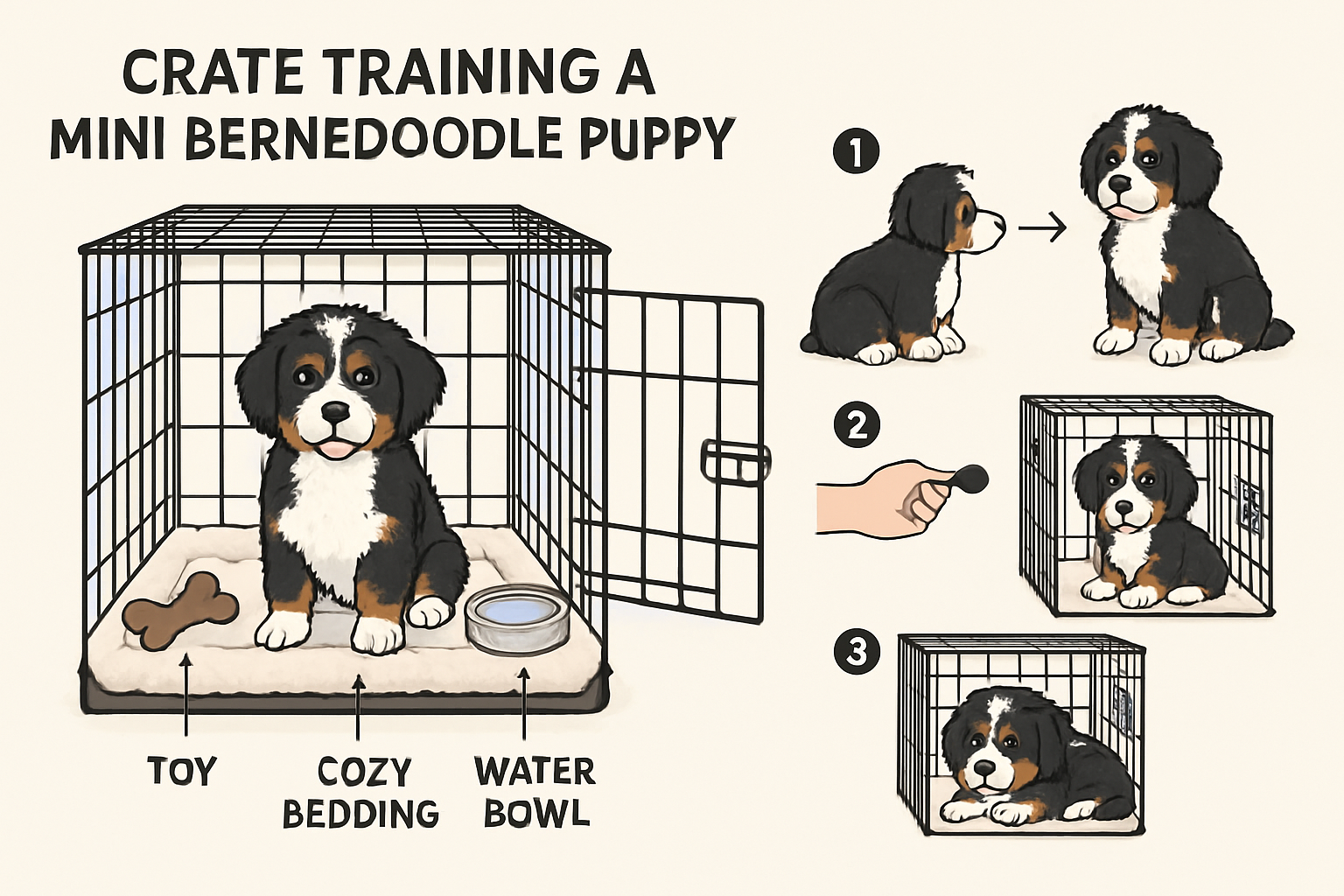
Crate training isn’t just about housebreaking – it’s about creating a safe space your mini bernedoodle loves. When done correctly, the crate becomes their personal den where accidents are virtually eliminated.
Advanced crate training techniques:
The “Crate Games” approach:
- Feed meals in the crate to create positive associations
- Hide special treats inside for discovery
- Practice “crate” command with door open initially
- Gradually increase duration by 15-minute increments
- Never use crate for punishment
Optimal crate schedule for 12-16 week old mini bernedoodles:
- Maximum crate time: 3-4 hours during the day
- Overnight: 6-8 hours (they should sleep through the night by now)
- Between crate sessions: Minimum 1 hour of activity and potty opportunities
Crate sizing guide:
- Too small: Can’t stand or turn around comfortably
- Perfect size: Can stand, turn, and lie down with minimal extra space
- Too large: Enough room to eliminate in one corner and sleep in another
Expanding Freedom Gradually
The biggest mistake mini bernedoodle owners make during weeks 12-16 is giving too much freedom too quickly. Here’s our proven expansion strategy:
Week 12: One room under constant supervision
Week 13: Same room with brief (5-10 minute) unsupervised periods
Week 14: Add adjacent room or expand current space slightly
Week 15: Longer unsupervised periods (15-20 minutes) in proven areas
Week 16: Begin supervised access to additional rooms
The “earned freedom” principle: Each new privilege must be earned through consistent success in the previous level.
Weather and Outdoor Challenges
Mini bernedoodles can be sensitive to extreme weather, which sometimes creates housebreaking challenges. Here’s how to maintain progress regardless of conditions:
Rainy day strategies:
- Covered potty area: Set up a partially covered outdoor space
- Quick trips: Get them out fast, stay positive despite weather
- Indoor backup plan: Training pads in designated area as last resort
- Weather gear: Consider a puppy raincoat for extended outdoor time
Cold weather considerations:
- Paw protection: Booties or paw balm for snow and ice
- Shorter, more frequent trips: Cold weather may speed up elimination
- Warm-up routine: Brief indoor activity before heading out
- Heated shelter: If you have a yard, consider a small heated outdoor shelter
Hot weather precautions:
- Early morning and evening trips: Avoid hot pavement
- Shade requirements: Ensure potty area has shade options
- Hydration balance: Maintain water access while managing elimination timing
- Paw pad protection: Hot surfaces can burn sensitive paw pads
Dealing with Setbacks and Regression
Even the best-trained mini bernedoodle puppies experience occasional setbacks. Understanding why these happen helps you respond appropriately:
Common causes of regression:
- Growth spurts: Rapid growth can temporarily affect bladder control
- Schedule changes: Daylight saving time, family schedule shifts
- Stress or excitement: New people, moving furniture, household changes
- Medical issues: UTIs, digestive upset, parasites
- Overconfidence: Giving too much freedom too quickly
The “reset protocol”:
- Return to basics: Go back to the last level where success was consistent
- Increase supervision: More frequent potty trips and closer monitoring
- Reinforce positive behaviors: Extra rewards for successful outdoor elimination
- Rule out medical issues: Consult your vet if regression is sudden or severe
- Stay patient: Regression is temporary with consistent response
Advanced Communication Training
By 12-16 weeks, your mini bernedoodle is capable of more sophisticated communication about their needs. Teaching them to “ask” to go outside transforms the relationship from you guessing their needs to them clearly communicating.
Bell training method:
- Hang bells at puppy height near the door
- Ring bells yourself before every potty trip
- Guide their paw to ring bells, then immediately go outside
- Reward bell ringing that leads to successful potty trips
- Ignore attention-seeking bell ringing (if they ring but don’t eliminate)
Alternative communication methods:
- “Speak” command: Teach them to bark once to signal need
- Door pawing: Reinforce gentle pawing at the door
- Specific location: Train them to go to a particular spot when they need out
- Eye contact and positioning: Reward intentional communication behaviors
Nutrition and Timing Optimization
What goes in affects what comes out, and when. Fine-tuning your mini bernedoodle’s nutrition schedule can significantly improve housebreaking success:
Optimal feeding schedule:
- Morning meal: 6:00-7:00 AM (elimination typically 15-30 minutes later)
- Midday meal: 12:00-1:00 PM (for puppies under 6 months)
- Evening meal: 5:00-6:00 PM (allows evening elimination before bedtime)
Food quality considerations:
- High-quality protein: Better digestion means more predictable elimination
- Consistent brand: Sudden food changes can disrupt digestive timing
- Appropriate portion sizes: Overfeeding leads to more frequent elimination
- Limited treats: Too many treats can upset digestive schedules
Water management:
- Free access during active hours: Don’t restrict water during the day
- Evening management: Pick up water 2-3 hours before bedtime
- Post-exercise hydration: Always allow drinking after play or exercise
- Monitor intake: Excessive drinking might indicate health issues
Socialization and Housebreaking
Proper socialization is crucial during this period, but it can temporarily challenge housebreaking progress. Here’s how to balance both needs:
Visitor protocols:
- Pre-visit potty trip: Always take them out before guests arrive
- Excitement management: Calm greetings prevent excitement-induced accidents
- Supervised interactions: Don’t let visitors overwhelm your puppy
- Post-visit routine: Return to normal schedule as quickly as possible
Public outings considerations:
- Vaccination status: Ensure puppy is fully vaccinated before public spaces
- Portable potty solutions: Know where appropriate elimination areas are located
- Schedule maintenance: Try to maintain regular meal and potty timing
- Stress monitoring: New experiences can affect elimination patterns
For more insights on creating daily routines for toy poodle puppies, many techniques transfer well to mini bernedoodles.
Page 3: Long-term Success and Troubleshooting (Weeks 16+)
Achieving Reliable Independence
By 16 weeks, your Designer Doodles mini bernedoodle should be demonstrating significant independence in their housebreaking habits. This is when we transition from intensive management to building lifelong reliability. The superior breeding and early socialization that makes Designer Doodles the best mini bernedoodle breeder in the USA really shines during this phase.
The Final Freedom Phase
Weeks 16-20: Supervised house access
Your mini bernedoodle has earned the right to explore more of your home, but with strategic supervision:
- Room-by-room introduction: Add one new room per week
- Success tracking: Keep a simple log of accidents vs. successes
- Consistent access points: Always use the same door for outdoor access
- Emergency backup: Keep cleaning supplies easily accessible
- Celebration milestones: Acknowledge accident-free days and weeks
Weeks 20-24: Increased independence
- Longer unsupervised periods: 30-60 minutes in proven safe spaces
- Overnight reliability: Should sleep 8+ hours without accidents
- Weather independence: Willing to go outside in various conditions
- Communication mastery: Clearly signals when they need to eliminate
6+ months: Full house privileges
- Complete house access during supervised times
- Reliable overnight control
- Consistent outdoor preferences
- Rare accidents (less than once per month)
Advanced Problem-Solving
Even well-trained mini bernedoodles can develop specific challenges that require targeted solutions:
Challenge: Marking behavior (especially males)
Solution strategy:
- Immediate neutering consultation with your veterinarian
- Belly band usage during transition period
- Increased supervision in previously marked areas
- Thorough enzymatic cleaning of all marked spots
- Positive reinforcement for appropriate elimination locations
Challenge: Submissive urination
Solution strategy:
- Low-key greetings: Avoid exciting or overwhelming interactions
- Confidence building: Focus on positive training experiences
- Approach modifications: Let puppy approach you rather than vice versa
- Veterinary consultation: Rule out underlying medical conditions
- Patience and consistency: This behavior often resolves with maturity
Challenge: Separation anxiety accidents
Solution strategy:
- Gradual departure training: Practice short absences
- Crate comfort: Ensure crate remains a positive space
- Pre-departure routine: Calm, consistent leaving ritual
- Return protocol: No dramatic greetings that increase anxiety
- Professional help: Consider trainer consultation for severe cases
Creating Backup Plans
Life happens, and even the best-trained mini bernedoodle needs backup systems for unusual circumstances:
Travel considerations:
- Portable crate: Familiar sleeping space in new environments
- Schedule maintenance: Keep feeding and potty times consistent
- Location scouting: Identify appropriate elimination areas in advance
- Stress management: Bring familiar toys and bedding
- Accident preparedness: Pack cleaning supplies and extra bedding
Schedule disruptions:
- Holiday flexibility: Maintain core routine while allowing some flexibility
- Illness protocols: Adjust expectations during puppy illness
- Family changes: New baby, moving, schedule changes require patience
- Weather emergencies: Have indoor backup plans for severe weather
Emergency situations:
- Medical issues: Know signs that require immediate veterinary attention
- Caregiver instructions: Clear guidelines for pet sitters or family members
- Backup supplies: Always have extra cleaning materials and training aids
Long-term Health Considerations
Successful housebreaking isn’t just about training – it’s about maintaining your mini bernedoodle’s long-term urinary and digestive health:
Regular veterinary care:
- Annual wellness exams: Include urinalysis and digestive health assessment
- Vaccination maintenance: Keep up with required boosters
- Parasite prevention: Regular deworming and flea/tick prevention
- Dental health: Poor dental health can affect overall digestive function
Diet and exercise balance:
- Age-appropriate nutrition: Adjust food as your mini bernedoodle matures
- Exercise consistency: Regular activity promotes healthy elimination
- Weight management: Obesity can affect bladder control
- Hydration monitoring: Ensure adequate water intake without excess
Environmental factors:
- Stress reduction: Chronic stress can affect elimination patterns
- Routine maintenance: Keep successful schedules even as life changes
- Social needs: Well-socialized dogs have fewer anxiety-related accidents
- Mental stimulation: Bored dogs may develop inappropriate behaviors
Transitioning to Adult Schedules
As your mini bernedoodle matures, their elimination needs will change:
6-12 months:
- Three meals daily transitioning to two
- Potty trips every 3-4 hours during active periods
- Overnight reliability for 8-10 hours
- Increased bladder capacity and control
12+ months:
- Two meals daily (morning and evening)
- Potty trips every 4-6 hours or as needed
- Full overnight control
- Adult elimination patterns established
Maintaining Success Long-term
Annual “refresher” training:
- Schedule review: Ensure routine still works for your lifestyle
- Skill reinforcement: Practice communication signals periodically
- Health assessment: Rule out any developing medical issues
- Environmental updates: Adjust for any home or lifestyle changes
Signs of continued success:
✅ Consistent outdoor elimination preference
✅ Clear communication about needs
✅ Rare accidents (less than monthly)
✅ Comfortable with routine changes
✅ Reliable overnight control
✅ Appropriate marking behavior (if any)
When to Seek Professional Help
Sometimes, despite your best efforts, professional intervention becomes necessary:
Consider professional training if:
- Accidents continue after 6 months of consistent training
- Regression occurs without obvious cause
- Behavioral issues develop alongside housebreaking problems
- Medical issues have been ruled out but problems persist
- Family stress around housebreaking becomes overwhelming
Types of professional help:
- Certified dog trainers: For behavioral modification
- Veterinary behaviorists: For complex behavioral issues
- Professional pet sitters: For schedule maintenance during travel
- Grooming professionals: For hygiene maintenance
For additional support with training techniques, explore our guide on house training toy and teacup poodle puppies, which offers complementary strategies.
Celebrating Your Success
Housebreaking your mini bernedoodle puppy is one of the most challenging but rewarding aspects of pet ownership. When you reach that magical moment of reliable, consistent success, take time to celebrate both your dedication and your puppy’s intelligence.
Remember that choosing a reputable breeder like Designer Doodles, who provides well-started puppies, gives you a significant advantage in this journey. Our commitment to early puppy development, combined with your consistent application of these proven techniques, creates the foundation for a lifetime of successful companionship.
Success indicators to celebrate:
🎉 First accident-free week
🎉 Successful communication about elimination needs
🎉 Overnight reliability
🎉 Visitor confidence (no accidents during social situations)
🎉 Travel success (maintaining habits away from home)
🎉 Full house privileges earned and maintained
The investment you make in proper housebreaking during these crucial early months pays dividends for the next 12-15 years of your mini bernedoodle’s life. Every consistent potty trip, every patient cleanup, and every celebration of success builds the foundation for a well-adjusted, confident adult dog.
Your mini bernedoodle’s intelligence, combined with Designer Doodles’ superior breeding and your dedicated training, creates the perfect recipe for housebreaking success. Trust the process, maintain consistency, and enjoy watching your puppy develop into a reliable, well-trained companion.
Conclusion
Housebreaking your mini bernedoodle puppy doesn’t have to be a months-long struggle filled with frustration and endless cleanup. With the right foundation from a reputable breeder like Designer Doodles, combined with consistent application of proven techniques, most mini bernedoodle puppies achieve reliable house training within 4-6 months.
The key takeaways for success include choosing a breeder who “well-starts” their puppies, maintaining unwavering consistency in your routine, using positive reinforcement techniques, and gradually expanding your puppy’s freedom as they earn it. Remember that setbacks are normal and temporary – patience and persistence always pay off.
Your next steps:
- Implement the daily schedule outlined in this guide starting immediately
- Set up your environment for success with proper supplies and space management
- Track your progress with a simple log to identify patterns and celebrate milestones
- Stay consistent with your routine, even when life gets busy
- Seek professional help if you encounter persistent challenges beyond 6 months
The intelligence and eagerness to please that make mini bernedoodles such wonderful companions also make them excellent students when it comes to housebreaking. Trust in your puppy’s ability to learn, maintain your consistency, and celebrate the small victories along the way.
For more information about our well-started mini bernedoodle puppies for sale and our comprehensive breeding program, visit Designer Doodles today. Your future self – and your carpets – will thank you for starting with a solid foundation from America’s most trusted mini bernedoodle breeder.
References:
[1] American Kennel Club. “Housetraining Your Puppy.” AKC.org, 2025.
[2] Association of Professional Dog Trainers. “Puppy Development and Training Guidelines.” APDT.com, 2025.
[3] Veterinary Behaviorists Association. “Normal Puppy Elimination Patterns.” VBA.org, 2025.