Finding the Best Toy Poodle Breeders: Your Complete Guide to Quality Breeders in 2026
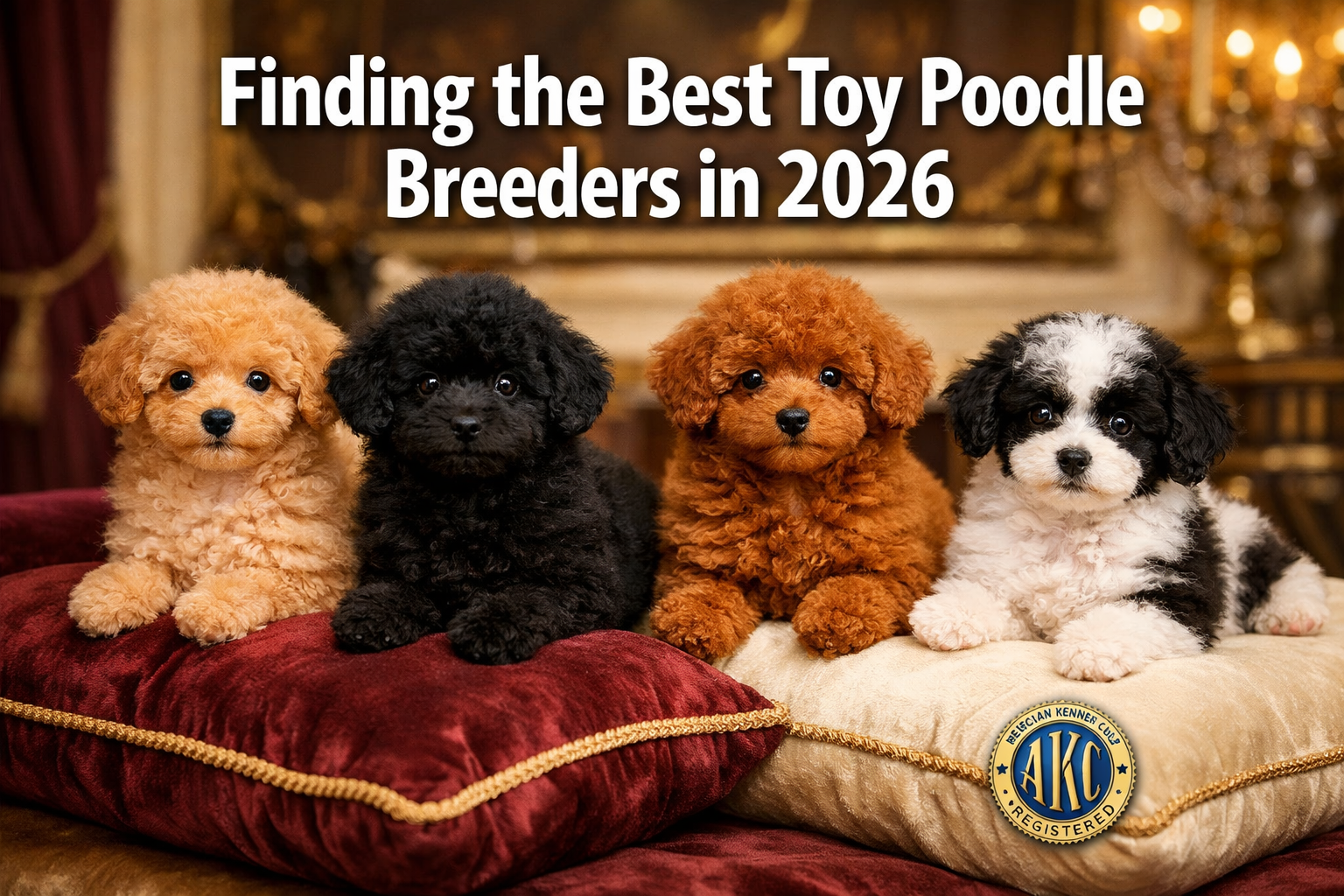
When I first started searching for a toy poodle puppy, I quickly discovered that finding the best toy poodle breeders isn’t just about browsing online listings or visiting the nearest pet store. The difference between a reputable breeder and a puppy mill can mean the difference between welcoming a healthy, well-socialized companion into your family or facing years of expensive health issues and behavioral problems. With toy poodles ranking among America’s most beloved companion breeds, the demand has unfortunately attracted both exceptional breeders and those who prioritize profit over puppy welfare.
Key Takeaways
• Health testing is non-negotiable – The best toy poodle breeders conduct comprehensive genetic testing for common issues like progressive retinal atrophy, hip dysplasia, and epilepsy
• Proper socialization starts early – Quality breeders expose puppies to various sounds, textures, and experiences during the critical 3-8 week period
• Transparency indicates quality – Reputable breeders welcome facility visits, provide health records, and maintain ongoing relationships with puppy families
• Geographic location matters – Georgia and Florida host some of the nation’s top toy poodle breeding programs with year-round favorable conditions
• Investment pays off long-term – While quality toy poodles cost $1,500-$4,000 initially, proper breeding reduces lifetime veterinary expenses significantly which is why finding the right toy poodles for sale is key.
What Makes the Best Toy Poodle Breeders Stand Out
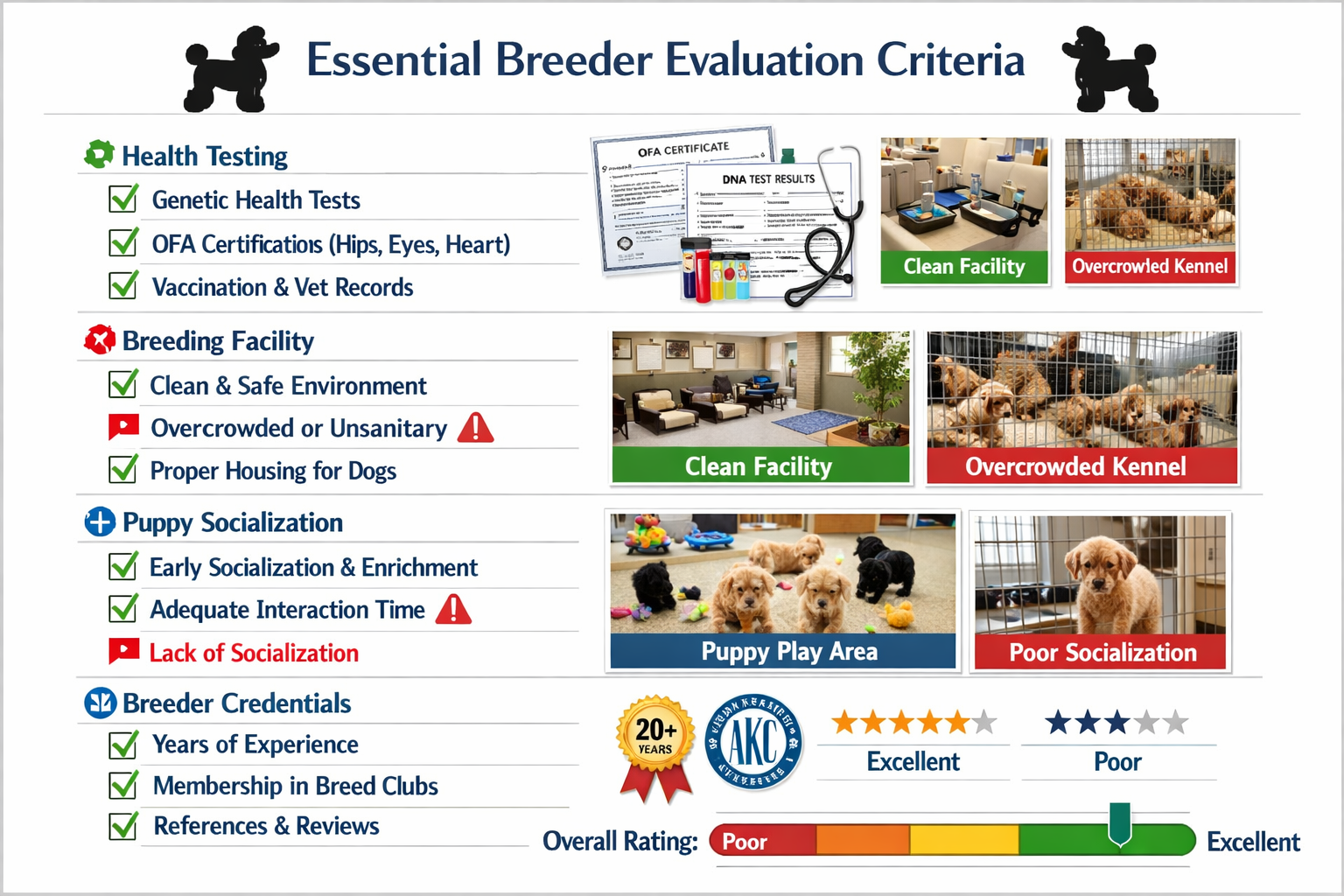
The foundation of exceptional toy poodle breeding lies in the breeder’s commitment to the breed standard, health testing, and ethical practices. The best toy poodle breeders distinguish themselves through several key characteristics that separate them from commercial puppy operations and backyard breeders.
Comprehensive Health Testing Programs
Responsible toy poodle breeders invest heavily in genetic testing before breeding any dogs. The Orthopedic Foundation for Animals (OFA) and the Canine Health Information Center (CHIC) provide standardized testing protocols that quality breeders follow religiously. These tests screen for:
- Progressive Retinal Atrophy (PRA) – A genetic condition that can lead to blindness
- Hip Dysplasia – Joint malformation that causes pain and mobility issues
- Epilepsy – Seizure disorders that affect quality of life
- Von Willebrand’s Disease – A blood clotting disorder
- Degenerative Myelopathy – A progressive spinal cord disease
The best breeders provide documentation of these tests and often exceed minimum requirements by testing for additional conditions. They understand that investing in health testing protects both their breeding program and the families who welcome their puppies.
Early Socialization and Puppy Development
Quality toy poodle breeders implement structured early socialization strategies that begin before puppies even open their eyes. This critical period shapes a puppy’s future temperament and adaptability.
Neurological Stimulation (Days 3-16):
- Gentle handling exercises
- Temperature variation exposure
- Tactile stimulation with different textures
- Brief positional changes
Environmental Enrichment (Weeks 3-8):
- Introduction to household sounds (vacuum, TV, music)
- Various surface textures (grass, concrete, carpet)
- Interaction with different people and gentle children
- Exposure to car rides and carrier training
Breeding Facility Standards
The physical environment where toy poodles are raised speaks volumes about a breeder’s priorities. Exceptional facilities feature:
🏠 Clean, spacious living areas with adequate ventilation and natural lighting
🌿 Outdoor access for exercise and fresh air
🛁 Professional grooming stations for coat maintenance
🏥 On-site veterinary care or established relationships with local vets
📚 Record-keeping systems that track health, breeding, and puppy placement
Ongoing Support and Education
The best toy poodle breeders view puppy placement as the beginning of a lifelong relationship, not a transaction. They provide:
- Detailed care instructions and feeding schedules
- Training resources and behavioral guidance
- Health guarantees with clear terms
- Availability for questions throughout the dog’s life
- Take-back policies if families cannot keep their dogs
Quality breeders also educate potential owners about toy poodle care requirements and help match puppies with appropriate families based on lifestyle and experience level.
How to Evaluate Toy Poodle Breeders: Red Flags vs. Green Flags
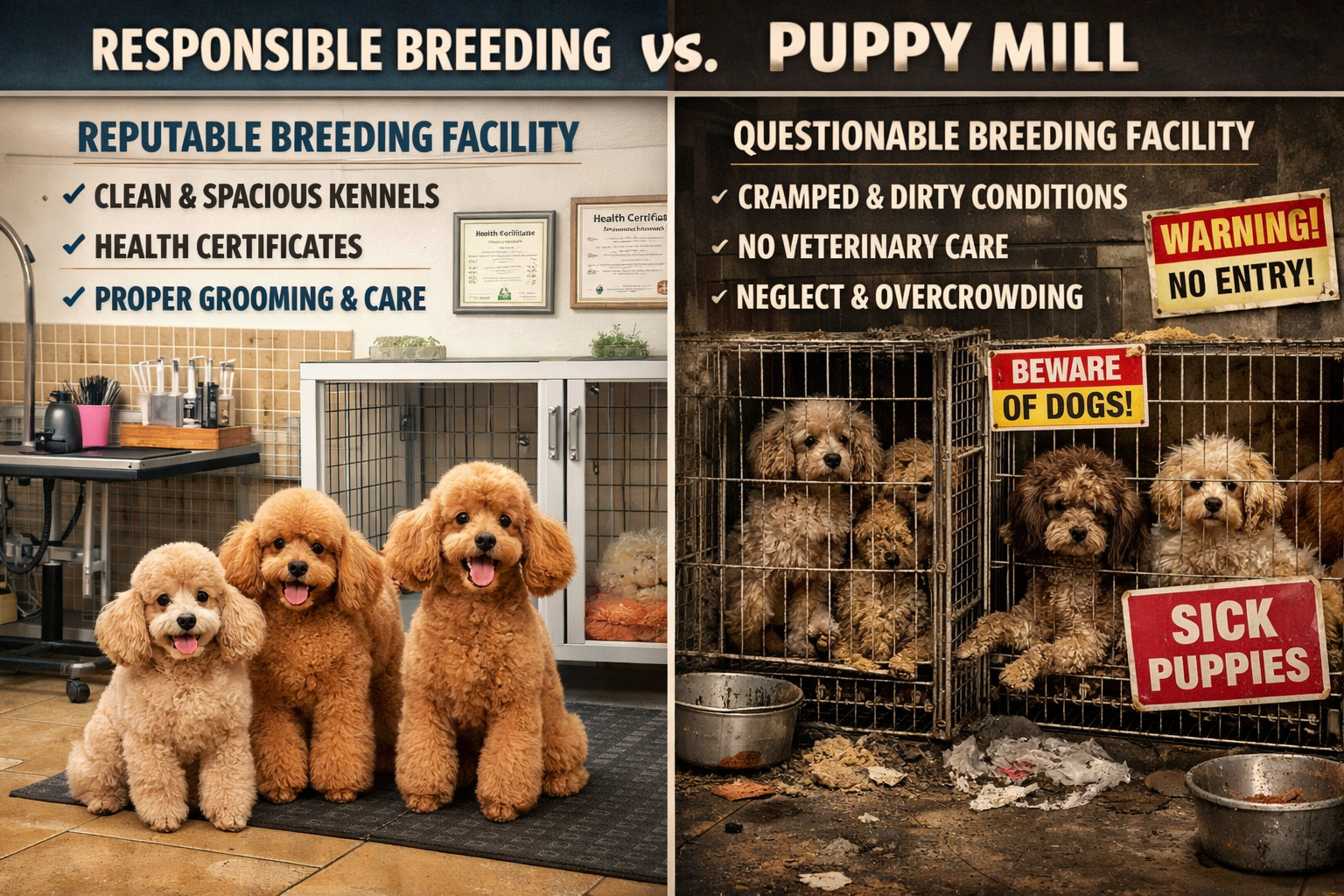
Distinguishing between reputable breeders and those operating puppy mills or substandard facilities requires careful evaluation. Understanding the warning signs can save you from heartbreak and financial loss while ensuring you support ethical breeding practices.
Green Flags: Signs of Quality Breeders
🟢 Facility Transparency
Reputable breeders eagerly welcome visits to their facilities. They’re proud of their operation and want potential puppy families to see where their dogs live and how puppies are raised. Quality breeders often provide virtual tours if distance is a factor.
🟢 Limited Breeding Program
The best toy poodle breeders typically focus on one or two breeds and maintain a small number of breeding dogs. This allows them to provide individual attention to each dog and carefully plan breedings for genetic diversity and health.
🟢 Health Documentation
Quality breeders provide complete health records including:
- Vaccination schedules with veterinary clinic information
- Genetic testing results for both parents
- Health guarantees with specific terms and duration
- Veterinary examination records for puppies
🟢 Screening Process
Responsible breeders interview potential families extensively. They ask about:
- Previous dog ownership experience
- Living situation and yard space
- Family schedules and activity levels
- Long-term commitment to the dog
- Plans for training and socialization
🟢 Breed Knowledge
Exceptional breeders demonstrate deep understanding of toy poodle characteristics, including:
- Temperament variations between bloodlines
- Grooming requirements and coat care
- Exercise needs and mental stimulation
- Common health concerns and prevention strategies
Red Flags: Warning Signs to Avoid
🔴 Multiple Breeds Available
Breeders offering numerous breeds simultaneously often prioritize quantity over quality. Puppy mills frequently advertise “designer dogs” alongside purebreds to maximize profit margins.
🔴 Always Available Puppies
Quality breeding requires careful timing and planning. Breeders with constant puppy availability likely operate commercial facilities rather than thoughtful breeding programs.
🔴 No Health Testing Documentation
Refusal to provide genetic testing results or health clearances indicates corners being cut on essential health screening. Legitimate breeders proudly share this information.
🔴 Unwillingness to Meet
Breeders who insist on meeting in parking lots, refuse facility visits, or only communicate through intermediaries often have something to hide about their operation.
🔴 Pressure Sales Tactics
Quality breeders never pressure quick decisions. They want families to carefully consider the commitment and often have waiting lists for their puppies.
Questions to Ask Potential Breeders
When evaluating toy poodle breeders, prepare a comprehensive list of questions:
- Can I visit your facility and meet the puppy’s parents?
- What health testing have you completed on the breeding dogs?
- How do you socialize your puppies during the first eight weeks?
- What health guarantee do you provide?
- Can you provide references from previous puppy families?
- What ongoing support do you offer after puppy placement?
- Why did you choose to breed this particular pairing?
- How many litters do you produce annually?
The breeder’s responses will reveal their priorities and level of commitment to ethical breeding practices. Quality breeders appreciate thorough questions and view them as signs of responsible potential owners.
Top Toy Poodle Breeding Regions: Georgia and Florida Excellence
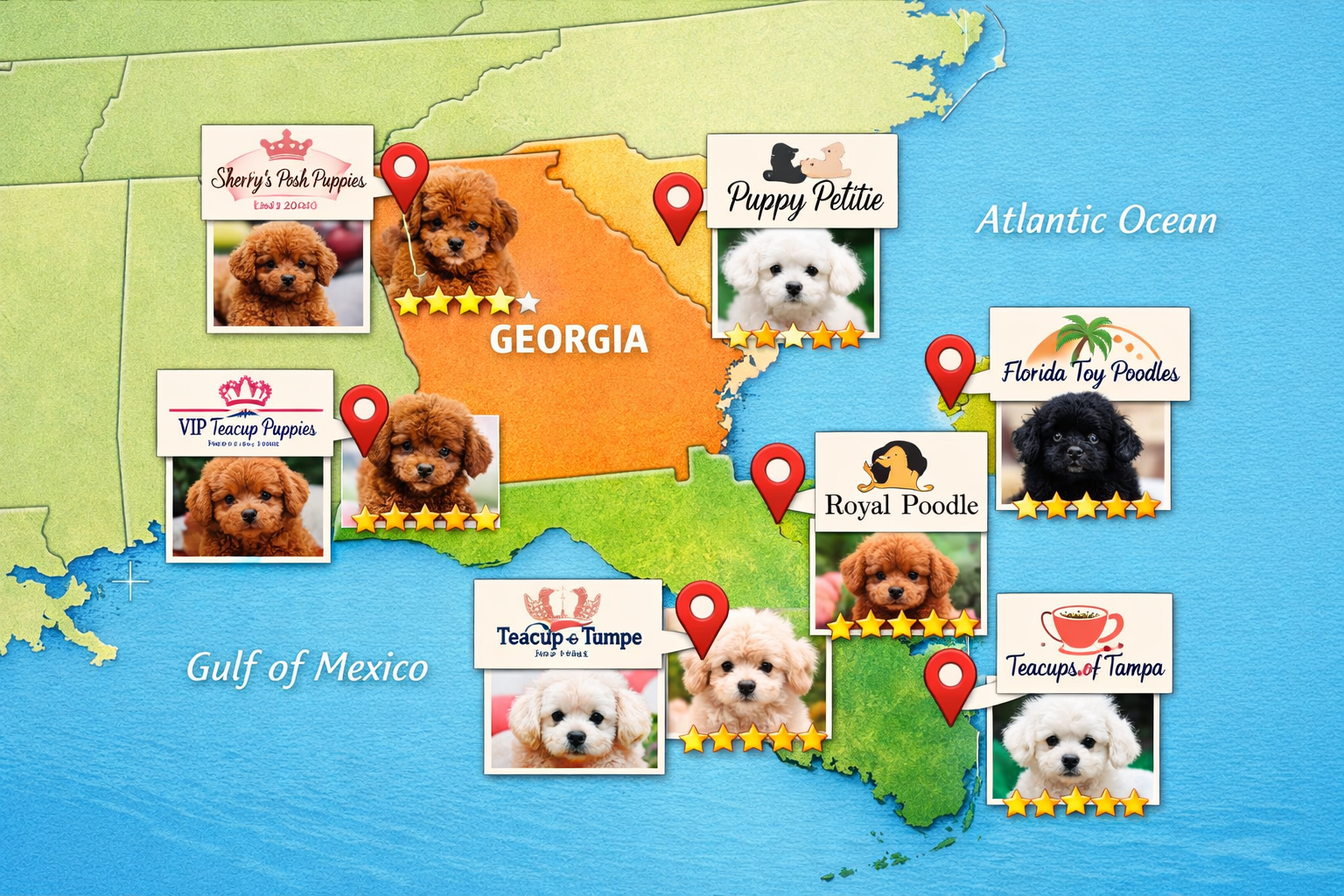
The southeastern United States has emerged as a premier region for toy poodle breeding, with Georgia and Florida leading the way in producing exceptional dogs. The favorable climate, established veterinary networks, and strong breeding communities make these states ideal for raising healthy, well-socialized toy poodles.
Georgia’s Toy Poodle Breeding Excellence
Georgia’s mild climate and dog-friendly culture have fostered a thriving community of the best toy poodle breeders in the region. The state’s central location makes it accessible to families throughout the Southeast, while the established veterinary infrastructure supports comprehensive health testing and care.
Notable Georgia Advantages:
- Year-round outdoor exercise opportunities
- Multiple veterinary schools providing advanced care options
- Active dog show and breeding communities
- Reasonable cost of living allowing breeders to focus on quality
Georgia breeders often specialize in specific color varieties, with many focusing on the popular apricot and red toy poodles. The state’s breeding programs frequently produce dogs that excel in both conformation and companion roles.
Regional Breeding Characteristics:
- Strong emphasis on temperament testing
- Collaboration between breeders for genetic diversity
- Integration with local training and socialization programs
- Focus on family-friendly companion dogs
Florida’s Toy Poodle Paradise
Florida’s tropical climate and large population of dog enthusiasts have created an environment where toy poodle breeding flourishes. The best toy poodle breeders in Florida benefit from year-round breeding seasons and extensive networks of canine professionals.
Florida Breeding Advantages:
- Consistent weather for outdoor socialization
- Large market supporting specialized breeding programs
- Advanced veterinary facilities and specialists
- Strong tourism industry creating demand for well-bred companions
Many Florida breeders focus on producing toy poodles suitable for therapy and emotional support work. The state’s large retirement population has created demand for calm, well-trained companion dogs that excel in these roles.
Specialized Programs:
- Therapy and emotional support dog training
- Apartment and condo-appropriate temperaments
- Heat-tolerant bloodlines for tropical climates
- Advanced grooming and coat care programs
Regional Breeding Networks
Both Georgia and Florida benefit from collaborative breeding networks where reputable breeders share resources, knowledge, and occasionally breeding dogs to maintain genetic diversity. These networks often include:
Professional Organizations:
- State poodle clubs with strict membership requirements
- Regional specialty shows and breeding seminars
- Mentorship programs for new breeders
- Continuing education on health and genetics
Shared Resources:
- Genetic testing laboratories and veterinary specialists
- Professional handlers and grooming services
- Training facilities and socialization programs
- Transport networks for puppy placement
Climate Considerations for Toy Poodle Breeding
The southeastern climate offers unique advantages for toy poodle breeding while requiring specific adaptations:
Benefits:
- Extended outdoor seasons for exercise and socialization
- Natural vitamin D production from sunlight exposure
- Reduced heating costs allowing more resources for dog care
- Year-round access to fresh air and natural environments
Adaptations:
- Heat management during summer months
- Humidity control in breeding facilities
- Parasite prevention programs
- Seasonal grooming adjustments
Quality breeders in both states have developed expertise in managing these climate factors to optimize puppy development and adult dog health.
Pricing, Health Guarantees, and What to Expect
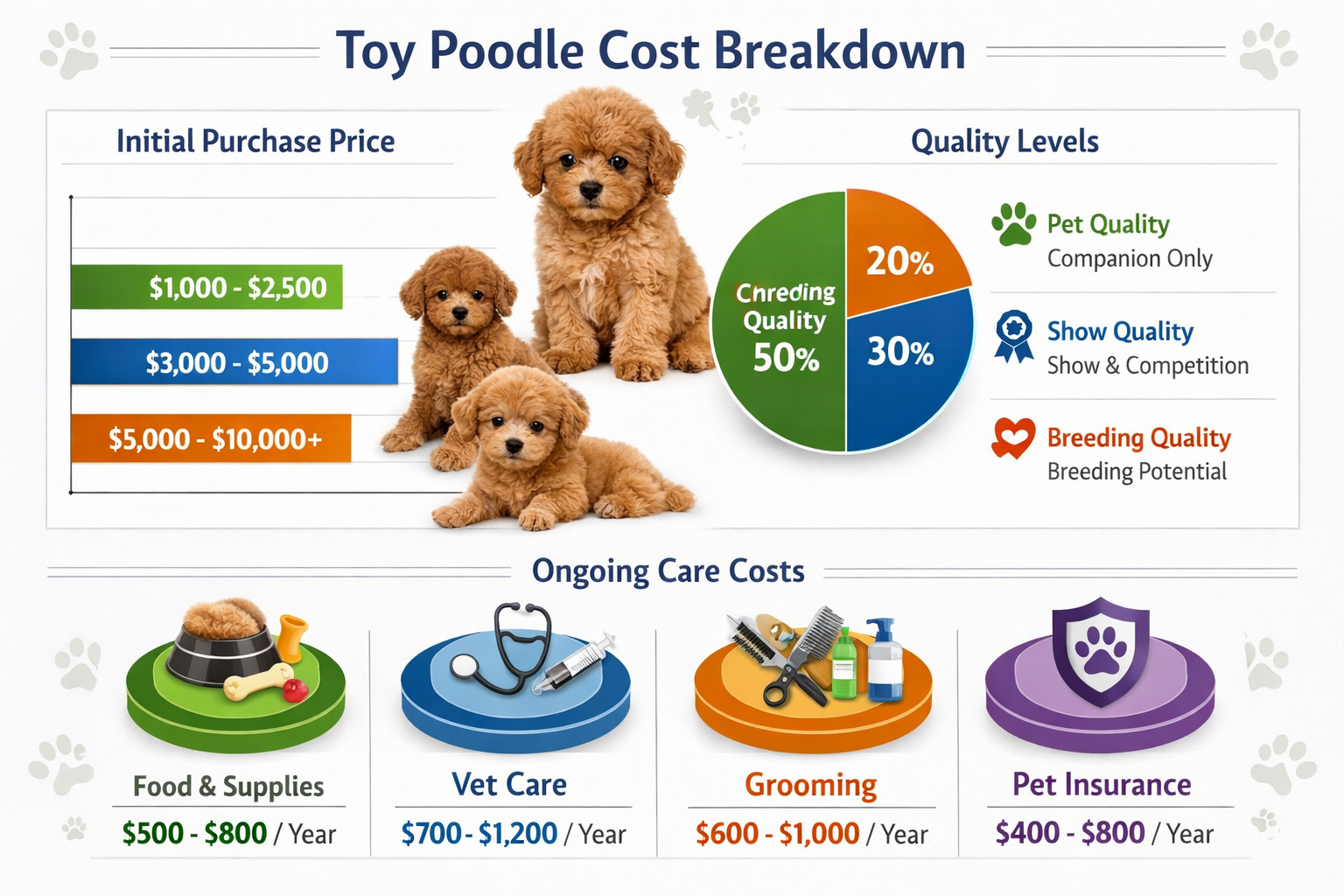
Understanding the financial investment required for a quality toy poodle helps families budget appropriately while recognizing the value that the best toy poodle breeders provide. The initial purchase price represents only a portion of the total investment in a well-bred companion.
Toy Poodle Pricing Structure
Quality toy poodle pricing varies significantly based on several factors:
Base Price Ranges (2026):
- Pet Quality: $1,500 – $2,500
- Breeding Rights: $2,500 – $4,000
- Show Potential: $3,000 – $5,000+
- Champion Bloodlines: $4,000 – $8,000+
Factors Affecting Price:
🎨 Color Rarity
Rare colors like parti, phantom, or deep red command premium prices due to the genetic complexity required to produce them consistently.
🏆 Bloodline Quality
Dogs from champion bloodlines with extensive health testing cost more due to the breeder’s investment in quality breeding stock.
📍 Geographic Location
Breeders in high-cost areas typically charge more, while those in rural regions may offer more competitive pricing.
🏥 Health Testing Investment
Comprehensive health testing can cost breeders $1,000+ per breeding dog, which is reflected in puppy prices.
Comprehensive Health Guarantees
Reputable breeders provide detailed health guarantees that protect both the puppy and the family. Understanding these guarantees helps evaluate breeder quality and provides peace of mind.
Standard Health Guarantee Components:
Genetic Defect Coverage (1-2 years):
- Hip dysplasia and joint disorders
- Eye conditions including PRA
- Heart defects and murmurs
- Neurological disorders
Infectious Disease Protection (2-4 weeks):
- Parvovirus and distemper
- Kennel cough and respiratory infections
- Parasitic infections
Guarantee Terms and Conditions:
- Veterinary examination requirements within 72 hours
- Specific veterinary documentation needed for claims
- Replacement puppy vs. refund policies
- Ongoing care requirements to maintain coverage
Initial Setup Costs
Beyond the puppy purchase price, new toy poodle owners should budget for essential supplies and services:
Immediate Needs ($300-500):
- High-quality puppy food and feeding supplies
- Crate, bedding, and comfort items
- Collar, leash, and identification tags
- Initial grooming supplies and tools
Veterinary Care ($400-800):
- Initial examination and health assessment
- Vaccination series completion
- Spaying/neutering when age-appropriate
- Microchipping for identification
Training and Socialization ($200-600):
- Puppy training classes
- Basic obedience instruction
- Socialization opportunities and experiences
Long-term Investment Considerations
Quality breeding significantly impacts lifetime costs through reduced health problems and better temperament:
Annual Care Costs:
- Veterinary Care: $800-1,500
- Professional Grooming: $600-1,200
- Quality Food: $300-500
- Supplies and Toys: $200-400
Potential Savings from Quality Breeding:
- Reduced emergency veterinary costs
- Lower risk of genetic health conditions
- Better temperament reducing training needs
- Longer lifespan extending companionship
Payment and Pickup Procedures
Professional breeders maintain structured processes for puppy placement:
Deposit and Payment:
- Non-refundable deposits ($200-500) to reserve puppies
- Final payment due at pickup or before shipping
- Accepted payment methods (cash, certified check, wire transfer)
- Payment schedule for expensive puppies
Pickup Arrangements:
- Scheduled appointment times for facility visits
- Puppy preparation including final veterinary check
- Documentation provided at pickup
- Transportation options for distant families
Understanding these financial aspects helps families make informed decisions while supporting ethical breeding practices that benefit the entire toy poodle community.
🐩 Toy Poodle Breeder Evaluation Tool
Rate potential breeders to make an informed decision
Health Testing & Documentation
Facility & Breeding Practices
Socialization & Puppy Care
Professional Standards
Breeder Quality Score
Conclusion: Finding Your Perfect Toy Poodle Companion
Selecting from the best toy poodle breeders requires patience, research, and commitment to supporting ethical breeding practices. The investment in finding a quality breeder pays dividends through years of companionship with a healthy, well-socialized dog that brings joy to your family.
Remember that the lowest price rarely indicates the best value when it comes to toy poodle puppies. Quality breeders invest significantly in health testing, proper socialization, and ongoing support that benefits both you and your future companion. The extra cost upfront often saves thousands in veterinary bills and behavioral training later.
As you begin your search, focus on breeders who demonstrate transparency, prioritize health testing, and maintain genuine relationships with their puppy families. Whether you choose a breeder in Georgia, Florida, or elsewhere, the key characteristics of ethical breeding remain consistent.
Your Next Steps:
- Research thoroughly – Use the evaluation criteria and tools provided to assess potential breeders
- Visit facilities – Never purchase a puppy without meeting the breeder and seeing their operation
- Ask questions – Quality breeders welcome inquiries and provide detailed information
- Prepare your home – Set up your space before bringing your puppy home
- Plan for success – Budget for training, grooming, and ongoing care to ensure your toy poodle thrives
The perfect toy poodle companion is waiting for you through a reputable breeder who shares your commitment to the breed’s health and happiness. Take the time to find the best toy poodle breeders, and you’ll be rewarded with years of unconditional love and companionship from your new family member.
References
[1] American Kennel Club. “Toy Poodle Breed Standard.” AKC.org, 2026.
[2] Orthopedic Foundation for Animals. “Health Testing Requirements for Poodles.” OFA.org, 2026.
[3] Canine Health Information Center. “Recommended Health Testing Protocols.” CHIC Database, 2026.
[4] Professional Dog Breeders Association. “Ethical Breeding Guidelines.” PDBA.org, 2026.