Finding Quality Toy Poodles Nearby: Your Complete Guide to Reputable Breeders in 2026
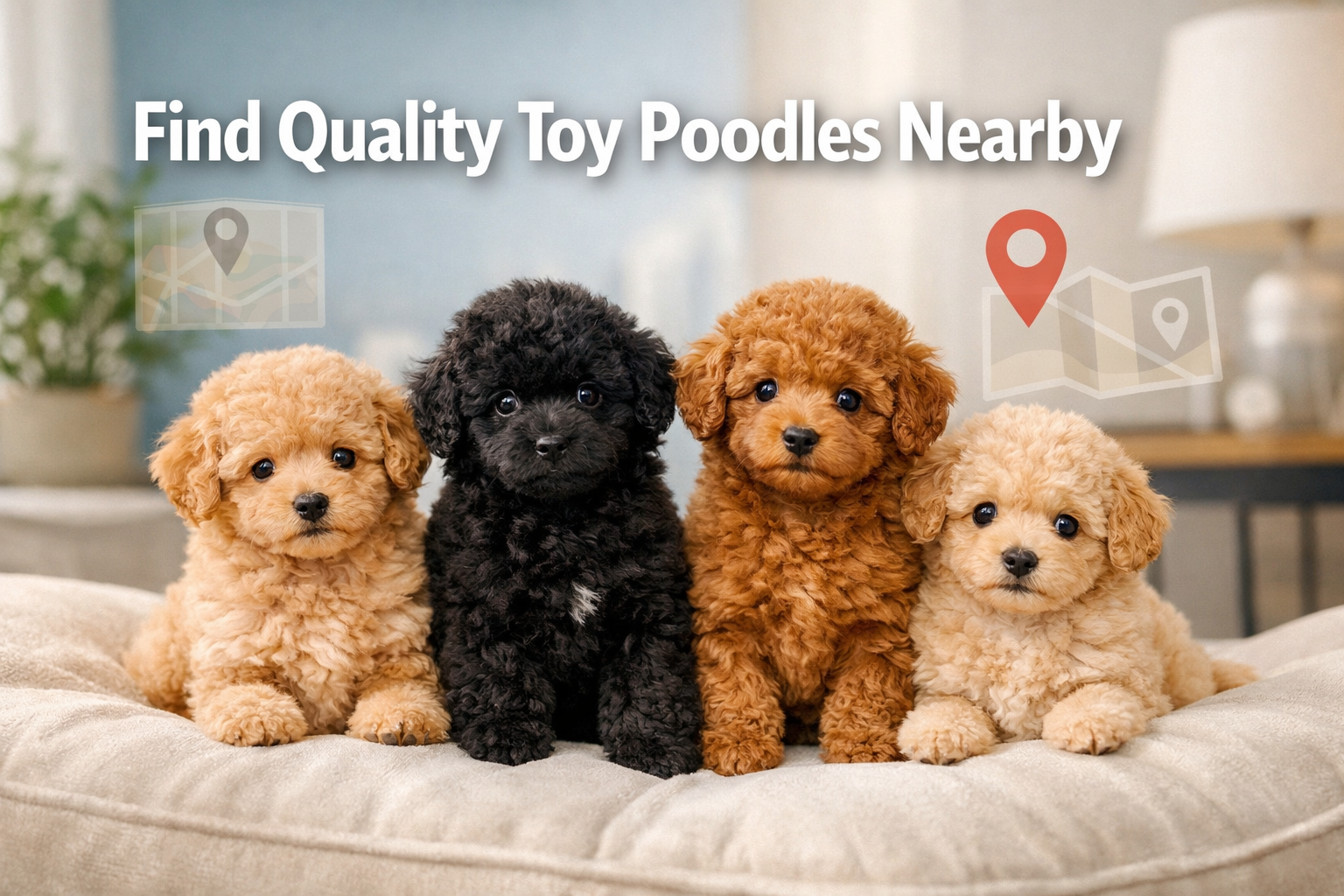
Have you ever wondered why toy poodles consistently rank among America’s most beloved companion dogs? 🐕 As someone who has spent years researching and connecting families with quality toy poodles nearby, I can tell you that these remarkable little dogs offer the perfect combination of intelligence, affection, and adaptability that modern families crave.
The journey to find toy poodles nearby begins with understanding what makes these miniature companions so special. Standing just 6-10 inches tall and weighing 4-6 pounds, toy poodles pack enormous personality into their tiny frames. Their hypoallergenic coats, exceptional intelligence, and unwavering loyalty have made them the ideal choice for families, seniors, and first-time dog owners across the country.
Key Takeaways
• Reputable breeders are essential for finding healthy, well-socialized toy poodles with proper AKC registration and health clearances
• Geographic location matters – Georgia and Florida lead the nation in quality toy poodle breeding programs with year-round availability
• Health testing and certification should be non-negotiable when evaluating toy poodle breeders in your area
• Preparation and research before contacting breeders will help you ask the right questions and identify red flags
• Investment ranges from $1,500-$4,000+ for quality toy poodles from reputable breeders with full health guarantees
Understanding the Toy Poodle Breed: What Makes Them Special
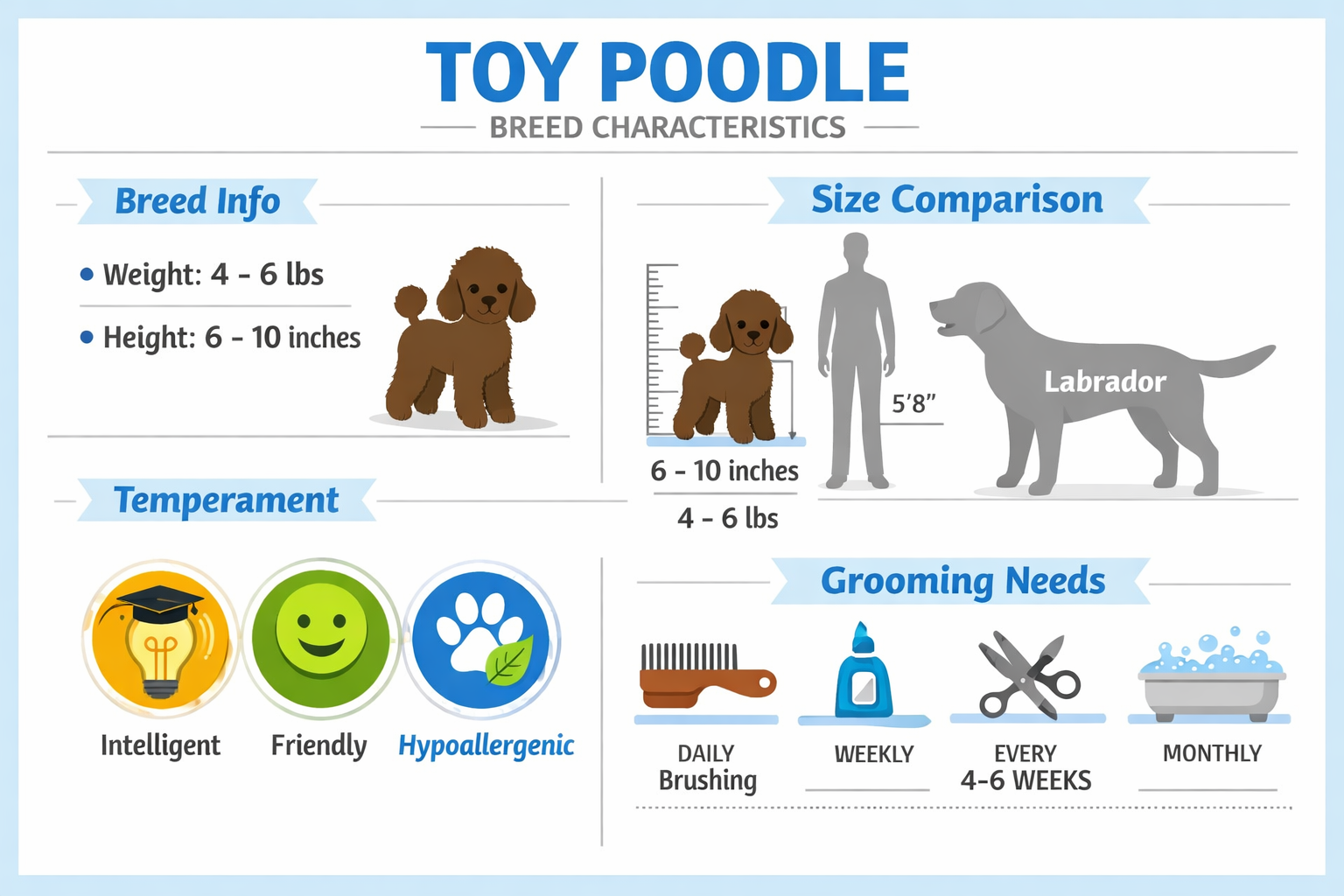
When searching for toy poodles nearby, it’s crucial to understand exactly what you’re looking for in this remarkable breed. Toy poodles represent the smallest variety of the poodle family, but don’t let their size fool you – these dogs possess the same intelligence and trainability that has made poodles famous worldwide.
Physical Characteristics and Temperament
Size and Appearance:
- Height: 6-10 inches at the shoulder
- Weight: 4-6 pounds when fully grown
- Lifespan: 12-15 years on average
- Coat: Dense, curly, hypoallergenic
Temperament Traits:
- Highly intelligent and trainable
- Alert and excellent watchdogs
- Affectionate with family members
- Can be reserved with strangers initially
- Adaptable to various living situations
The color varieties in AKC toy poodles include black, white, brown, apricot, red, silver, blue, and parti-colored combinations. Each color variety maintains the same wonderful temperament and characteristics that make toy poodles such exceptional companions.
Health Considerations
Responsible breeders of toy poodles nearby will conduct comprehensive health testing on their breeding stock. Common health screenings include:
- Progressive Retinal Atrophy (PRA) testing
- Hip dysplasia evaluation (even in tiny dogs)
- Epilepsy genetic screening
- Von Willebrand’s Disease testing
- Cardiac examinations
Understanding these health considerations helps you ask informed questions when contacting breeders and ensures you’re prepared for the long-term commitment of toy poodle ownership.
Finding Reputable Toy Poodle Breeders Nearby
The process of locating quality toy poodle breeders in your area requires patience, research, and a clear understanding of what separates exceptional breeders from puppy mills or backyard breeders. In my experience helping families find their perfect companions, I’ve identified several key strategies that consistently lead to successful matches.
Research Strategies for Locating Quality Breeders
Online Resources:
- American Kennel Club (AKC) breeder directory
- Poodle Club of America member listings
- State and regional poodle club websites
- Verified breeder review platforms
Local Connections:
- Veterinary clinic recommendations
- Dog show and conformation events
- Pet supply store bulletin boards
- Local kennel club meetings
When searching for toy poodles nearby, start with the AKC’s official breeder directory. This resource provides a foundation of breeders who have committed to following AKC guidelines and ethical breeding practices. However, AKC registration alone doesn’t guarantee quality – you’ll need to dig deeper.
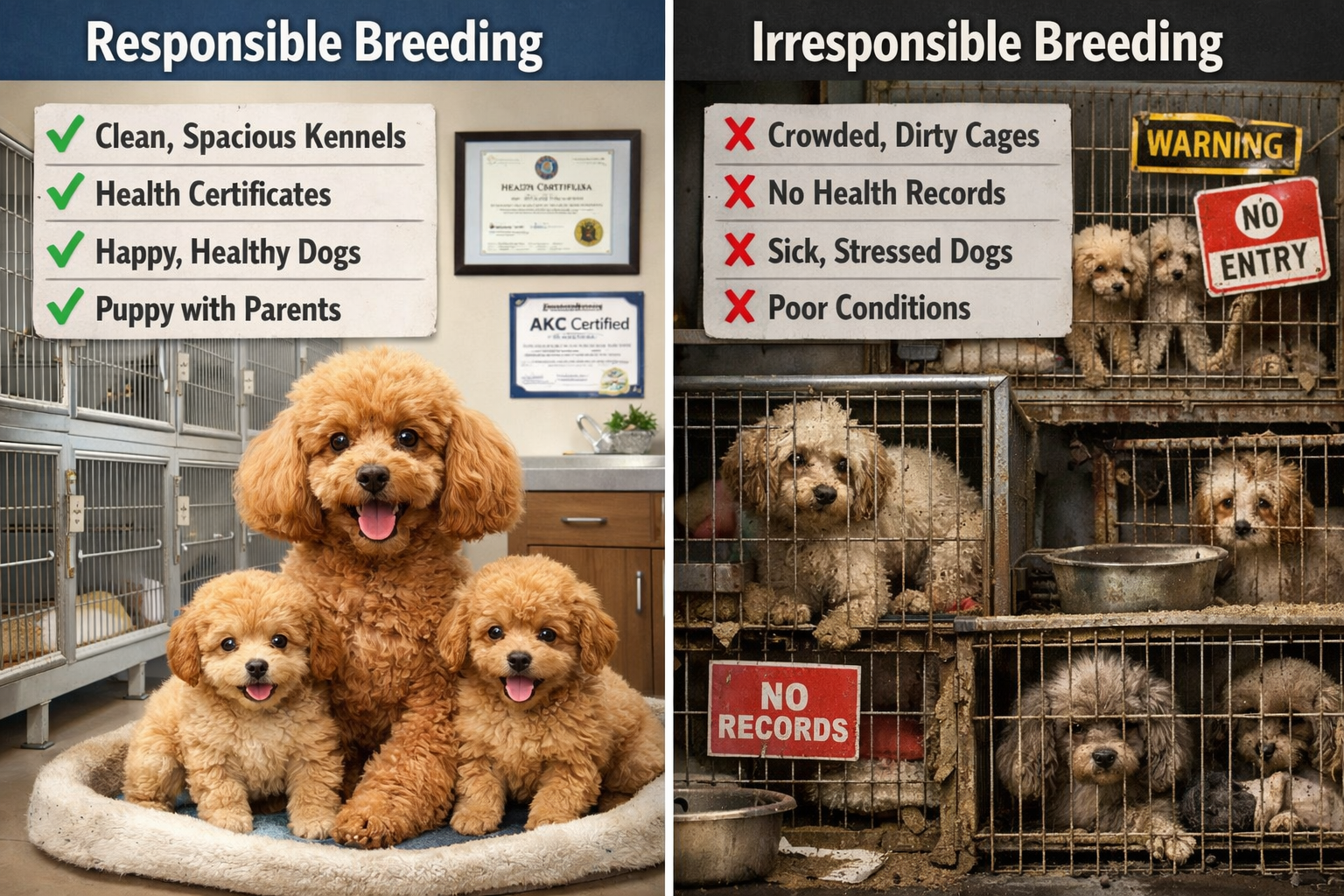
Red Flags to Avoid
Warning Signs of Problematic Breeders:
- Multiple litters available at once
- Unwillingness to show breeding facilities
- No health testing documentation
- Pressure to buy immediately
- Puppies always available
- Unusually low or high prices
- Poor communication or evasive answers
Puppy Mill Indicators:
- Dogs kept in poor conditions
- Breeding dogs appear unhealthy or fearful
- No interaction between puppies and humans
- Lack of socialization efforts
- Missing vaccination records
The best toy poodle breeders will welcome your questions, invite facility visits, and provide comprehensive documentation of their breeding practices and health testing protocols.
Questions to Ask Potential Breeders
Essential Breeder Interview Questions:
- Health Testing: “What health clearances do you have for both parents?”
- Breeding Philosophy: “How do you select breeding pairs?”
- Socialization: “How do you prepare puppies for family life?”
- Support: “What ongoing support do you provide new owners?”
- Contracts: “What guarantees come with your puppies?”
Follow-up Questions:
- Can I meet the puppy’s parents?
- What vaccinations and deworming have been completed?
- Do you provide a health guarantee?
- What happens if I can’t keep the puppy?
- Can you provide references from previous buyers?
Quality breeders will appreciate your thorough questioning and view it as a sign that you’re a serious, responsible potential owner.
Top Toy Poodle Breeding Regions: Georgia and Florida
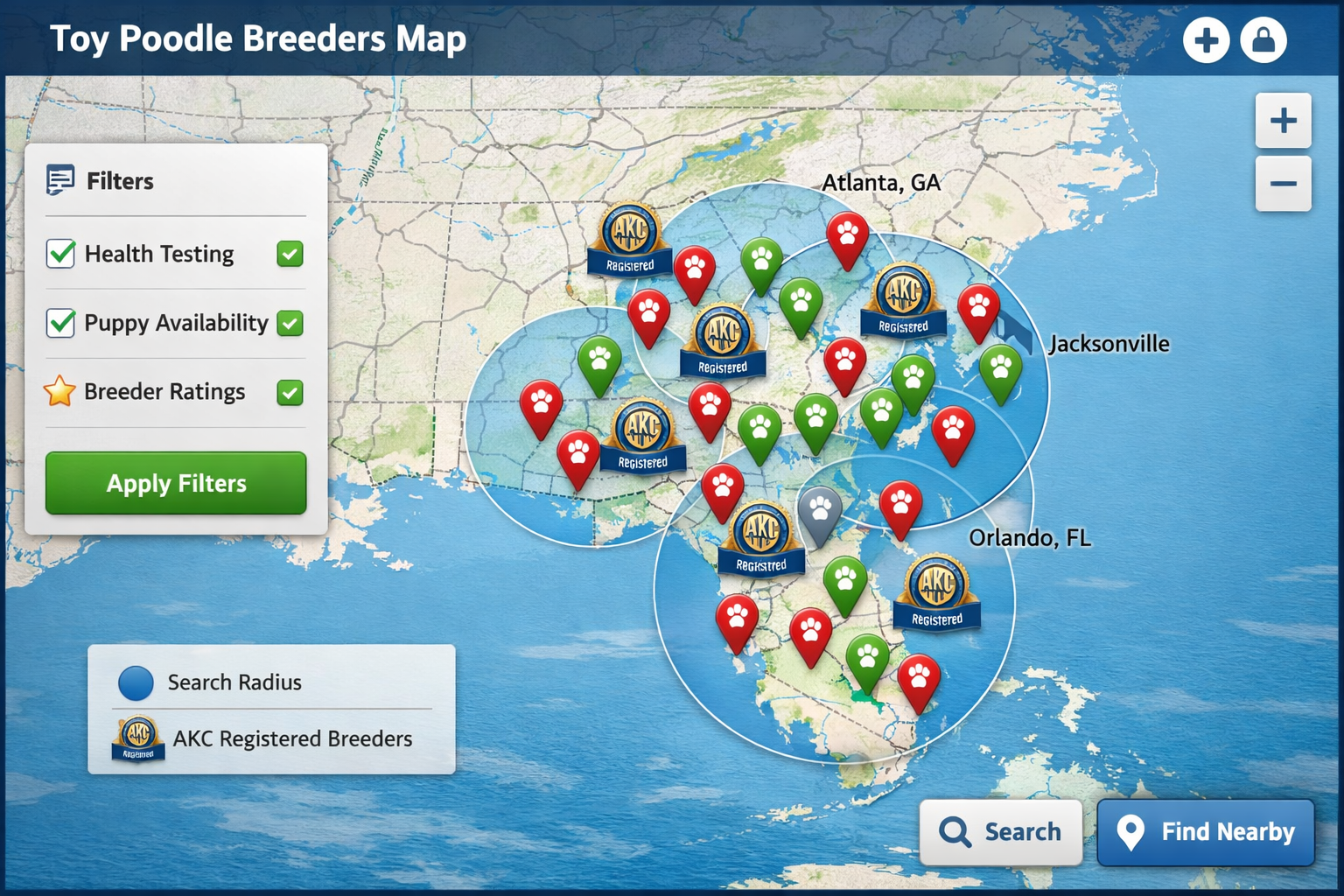
The southeastern United States has emerged as a premier region for toy poodle breeding, with Georgia and Florida leading the way in producing exceptional quality puppies. The favorable climate, established breeding communities, and strong veterinary support networks make these states ideal for both breeders and puppy buyers.
Georgia: The Heart of Southern Toy Poodle Breeding
Georgia’s toy poodle breeding community has flourished due to several key factors that benefit both breeders and buyers seeking toy poodles nearby:
Advantages of Georgia Breeders:
- Year-round moderate climate ideal for small dogs
- Strong network of poodle specialty veterinarians
- Active dog show and conformation community
- Established bloodlines with decades of careful breeding
- Proximity to major metropolitan areas
Notable Georgia Breeding Regions:
- Atlanta Metro Area: Home to numerous AKC-registered toy poodle breeders
- Savannah Region: Known for traditional breeding programs
- Augusta Area: Growing community of specialty poodle breeders
- Columbus Valley: Emerging hub for toy and miniature poodles
Georgia breeders often specialize in specific color varieties, with many focusing on the popular apricot and red toy poodles that have gained tremendous popularity in recent years. The state’s central location also makes it accessible to buyers from across the Southeast and beyond.
Florida: Year-Round Breeding Excellence
Florida’s unique position as a year-round breeding state has created opportunities for some of the most consistent toy poodle breeding programs in the country. The state’s large population and tourist industry have also created a strong market for quality companion dogs.
Florida Breeding Advantages:
- Consistent weather allows for year-round breeding
- Large population creates strong demand for quality puppies
- Excellent veterinary infrastructure
- Multiple international airports for puppy transport
- Strong dog show circuit
Key Florida Breeding Areas:
- Tampa Bay Region: Concentration of established toy poodle breeders
- Orlando Metro: Growing community with Disney-area appeal
- South Florida: High-end breeding programs serving affluent communities
- Jacksonville Area: Northern Florida breeding hub
- Panhandle Region: Traditional breeding programs with southern charm
The best toy poodle breeders in Florida often maintain waiting lists due to high demand, particularly for specific color varieties and exceptional bloodlines.
Comparing Regional Breeding Styles
Georgia Breeding Characteristics:
- Focus on traditional poodle temperament
- Emphasis on conformation and breed standards
- Strong health testing protocols
- Conservative breeding practices
- Family-oriented breeding programs
- the best toy poodles for sale in the USA.
Florida Breeding Characteristics:
- Innovation in color breeding programs
- Modern facilities and technology
- Diverse breeding goals and specialties
- Strong marketing and customer service
- International shipping capabilities
Both regions produce exceptional toy poodles, but understanding these regional differences can help you identify breeders whose philosophy aligns with your preferences and needs.
AKC Registration and Health Certifications
When searching for toy poodles nearby, understanding the importance of proper registration and health certifications can mean the difference between bringing home a healthy, well-bred companion and facing years of expensive health problems. The American Kennel Club (AKC) registration system provides a foundation of breed integrity, but it’s just the beginning of what you should expect from quality breeders.
Understanding AKC Registration Types
Full AKC Toy poodle puppies for sale Registration:
- Allows breeding rights
- Enables participation in dog shows
- Provides complete pedigree information
- Typically costs more than limited registration
- Requires breeder approval
Limited AKC Registration:
- Perfect for pet-quality puppies
- No breeding rights included
- Can participate in performance events
- Lower cost than full registration
- Can be upgraded later with breeder consent
The AKC toy poodle puppies from reputable breeders will come with proper documentation, including a three-generation pedigree that shows the puppy’s lineage and any titles or health clearances earned by ancestors.
Essential Health Testing for Toy Poodles
Required Health Clearances:
| Health Test | Purpose | Frequency |
|---|---|---|
| PRA (Progressive Retinal Atrophy) | Prevents hereditary blindness | Once in lifetime |
| Hip Dysplasia | Ensures proper joint formation | After 2 years old |
| Cardiac Exam | Detects heart abnormalities | Annually |
| Von Willebrand’s Disease | Blood clotting disorder screening | Once in lifetime |
| Epilepsy Genetic Test | Identifies seizure predisposition | Once in lifetime |
Additional Recommended Testing:
- Thyroid function panels
- Elbow dysplasia screening
- Degenerative myelopathy testing
- Neonatal encephalopathy screening
Quality breeders will provide copies of all health testing results and explain what each test means for your puppy’s future health. They should also offer health guarantees that cover genetic conditions for at least two years.
Interpreting Health Certificates
Understanding how to read and interpret health certificates is crucial when evaluating toy poodles nearby. Here’s what to look for:
OFA (Orthopedic Foundation for Animals) Certificates:
- Clear identification of the tested dog
- Specific test results (Normal, Carrier, Affected)
- Date of testing and veterinarian information
- Official OFA database number
CERF (Canine Eye Registration Foundation) Certificates:
- Annual eye examination results
- Veterinary ophthalmologist signature
- Clear statement of eye health status
- Date of examination (should be recent)
The common health concerns in toy poodle puppies can be significantly reduced through proper health testing of breeding stock, making this documentation essential for your peace of mind.
Breeder Health Guarantees
Standard Health Guarantee Components:
- Coverage period (typically 2-3 years for genetic conditions)
- Specific conditions covered
- Required veterinary examination timeline
- Replacement or refund policies
- Ongoing breeder support
What Should Be Included:
- Hip dysplasia coverage
- Eye condition protection
- Cardiac abnormality coverage
- Epilepsy protection
- Von Willebrand’s disease coverage
Red Flags in Health Guarantees:
- Extremely short coverage periods
- Vague language about covered conditions
- Unrealistic requirements for claims
- No coverage for genetic conditions
- Breeder unwillingness to discuss guarantees
Remember that a health guarantee is only as good as the breeder standing behind it. Established breeders with long track records are more likely to honor their commitments than newer operations.
Preparing for Your Toy Poodle Purchase
The excitement of finding quality toy poodles nearby can sometimes overshadow the important preparation work that ensures a successful transition for both you and your new companion. Proper preparation not only demonstrates to breeders that you’re a serious buyer but also sets the foundation for a lifetime of happiness with your toy poodle.
Financial Planning for Toy Poodle Ownership
Initial Purchase Costs:
- Pet-quality toy poodles: $1,500 – $2,500
- Show-quality toy poodles: $2,500 – $4,000+
- Champion bloodline toy poodles: $3,000 – $6,000+
First-Year Setup Expenses:
- Veterinary care and vaccinations: $500 – $800
- Quality food and treats: $200 – $400
- Grooming supplies and professional grooming: $300 – $600
- Crate, bedding, and toys: $200 – $400
- Training classes: $150 – $300
Ongoing Annual Costs:
- Veterinary care: $400 – $800
- Professional grooming: $600 – $1,200
- Quality food: $200 – $400
- Toys and supplies: $100 – $200
- Pet insurance (optional): $300 – $600
The budgeting for long-term toy poodle care requires careful consideration of both expected and unexpected expenses throughout your dog’s 12-15 year lifespan.
Home Preparation Essentials
Puppy-Proofing Your Space:
- Remove small objects that could be swallowed
- Secure electrical cords and outlets
- Install baby gates for restricted areas
- Remove toxic plants and chemicals
- Create safe spaces for rest and play
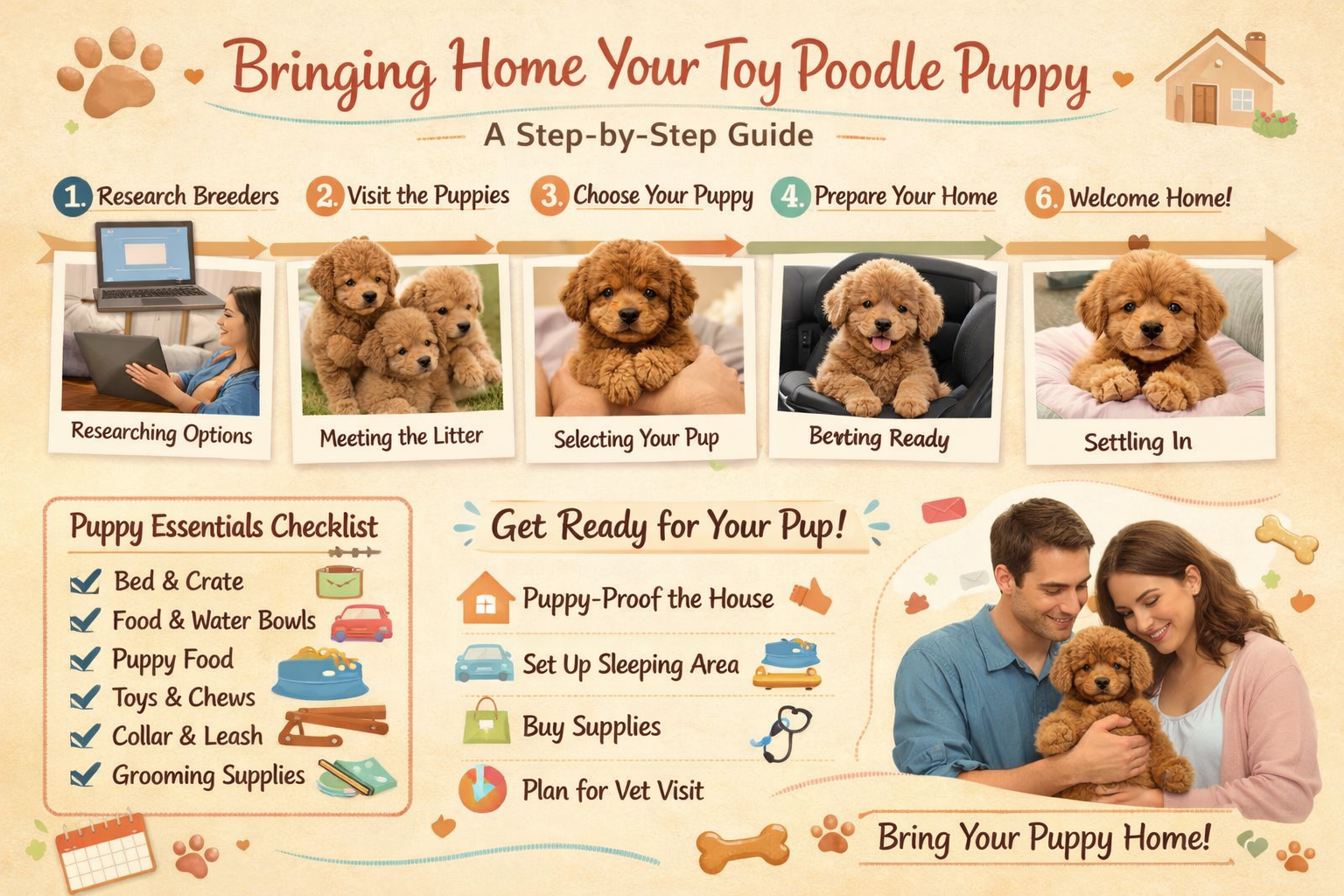
Essential Supplies Checklist:
- Crate: Appropriately sized for adult toy poodle
- Bedding: Washable, comfortable materials
- Food and water bowls: Stainless steel or ceramic
- High-quality puppy food: Recommended by breeder
- Collar and leash: Lightweight but secure
- ID tags: With current contact information
- Toys: Variety of textures and sizes
- Grooming supplies: Brush, nail clippers, toothbrush
Building Relationships with Breeders
Initial Contact Best Practices:
- Introduce yourself and your family situation
- Explain your experience with dogs
- Ask about current and upcoming litters
- Request information about their breeding program
- Schedule a facility visit if possible
Maintaining Communication:
- Respond promptly to breeder communications
- Ask thoughtful questions about care and training
- Share updates about your preparation progress
- Be flexible with pickup timing
- Respect breeder policies and procedures
The adorable toy poodle puppies from quality breeders often have waiting lists, so establishing good relationships early can help ensure you’re considered for future litters.
Visiting Breeder Facilities
What to Observe During Your Visit:
- Cleanliness: Facilities should be clean and odor-free
- Dog behavior: Adult dogs should be friendly and well-socialized
- Puppy conditions: Puppies should be active, clean, and curious
- Breeder knowledge: Should demonstrate expertise about the breed
- Documentation: Health records should be organized and available
Questions to Ask During Your Visit:
- Can I meet the puppy’s mother (and father if available)?
- How do you socialize your puppies?
- What health testing have you completed?
- What support do you provide after purchase?
- Can you provide references from previous buyers?
Red Flags During Facility Visits:
- Unwillingness to show where dogs live
- Sick or fearful adult dogs
- Poor sanitation conditions
- Pressure to buy immediately
- Inability to produce health documentation
Making the Final Decision: Choosing Your Toy Poodle
After researching toy poodles nearby, visiting facilities, and evaluating breeders, the moment arrives to make your final decision. This choice will impact your family for the next 12-15 years, so it’s important to approach it methodically while trusting your instincts about both the breeder and the specific puppy.
Evaluating Individual Puppies
Temperament Assessment:
When meeting potential puppies, observe their individual personalities and energy levels. Quality breeders often conduct basic temperament testing to help match puppies with appropriate families.
Physical Health Indicators:
- Eyes: Clear, bright, and alert without discharge
- Nose: Clean and slightly moist
- Ears: Pink inside, no odor or excessive wax
- Coat: Soft, clean, and free of parasites
- Movement: Coordinated gait without limping
- Energy: Appropriate activity level for age
Socialization Signs:
- Comfortable with human handling
- Curious about new experiences
- Appropriate play behavior with littermates
- Recovery from startling noises
- Interest in toys and exploration
The building confidence in shy toy poodle puppies process begins with proper early socialization, so look for puppies that have been exposed to various sounds, surfaces, and experiences.
Finalizing Contracts and Agreements
Essential Contract Elements:
- Health guarantee terms and coverage period
- Return policy if circumstances change
- Spay/neuter requirements for pet-quality puppies
- Breeding restrictions and registration limitations
- Ongoing support and communication expectations
Payment and Pickup Arrangements:
- Deposit requirements and payment schedules
- Pickup timing and location coordination
- Transportation arrangements if needed
- Required supplies for puppy pickup
- Emergency contact information
Preparing for Pickup Day
Final Preparation Checklist:
- Puppy-proof your home completely
- Set up crate and sleeping area
- Purchase recommended food brand
- Schedule first veterinary appointment
- Arrange time off work for bonding
- Prepare family members for arrival
Questions for Pickup Day:
- What has the puppy been eating and when?
- What is the current vaccination schedule?
- How has housetraining progressed?
- What commands or cues does the puppy know?
- When should the next veterinary visit occur?
The first 30 days home with a toy poodle puppy are crucial for establishing routines, building bonds, and setting the foundation for lifelong training success.
Building Long-term Breeder Relationships
Maintaining Communication:
Quality breeders appreciate updates about their puppies and often become valuable resources throughout your dog’s life. Share photos, ask questions about development, and inform them of any health concerns.
Future Considerations:
- Additional puppies: Many families return to the same breeder
- Breeding opportunities: Show-quality puppies may have breeding potential
- Health updates: Breeders use health information to improve their programs
- Referrals: Satisfied customers become the best advertisements
The relationship with your breeder shouldn’t end at pickup – it should evolve into a supportive partnership that benefits both your family and the broader toy poodle community.
Conclusion
Finding quality toy poodles nearby requires patience, research, and a commitment to working with reputable breeders who prioritize health, temperament, and proper breeding practices. Throughout this comprehensive guide, we’ve explored the essential elements that separate exceptional breeders from those who simply produce puppies for profit.
The journey begins with understanding what makes toy poodles such remarkable companions – their intelligence, affection, and adaptability make them ideal for modern families. However, these wonderful traits can only be fully realized when puppies come from health-tested parents and receive proper early socialization.
Key Success Factors:
- Thorough research of breeders in your target areas
- Health testing verification for all breeding stock
- Facility visits to observe conditions firsthand
- Contract review to understand guarantees and support
- Proper preparation for your new family member
The southeastern United States, particularly Georgia and Florida, offers some of the country’s finest toy poodle breeding programs. These regions combine favorable climates, established breeding communities, and strong veterinary support to produce exceptional puppies year-round.
Remember that the initial investment in a quality toy poodle from a reputable breeder pays dividends throughout your dog’s lifetime through better health, temperament, and the ongoing support that quality breeders provide. The advanced tricks for highly intelligent toy poodles become possible when you start with a well-bred, properly socialized puppy.
Your Next Steps:
- Create your breeder evaluation list using the criteria outlined in this guide
- Contact potential breeders with thoughtful questions about their programs
- Schedule facility visits to meet breeding dogs and see conditions
- Prepare your home and family for your new toy poodle’s arrival
- Build relationships with breeders who align with your values and needs
The perfect toy poodle companion is waiting for you – take the time to find the right breeder, and you’ll be rewarded with years of joy, laughter, and unconditional love from one of the world’s most remarkable small dog breeds. Your commitment to finding quality toy poodles nearby through reputable sources ensures that you’re not just getting a pet, but welcoming a new family member who will enrich your life in countless ways.
References
[1] American Kennel Club. (2026). Toy Poodle Breed Standard and Health Information.
[2] Poodle Club of America. (2026). Breeder Directory and Health Testing Requirements.
[3] Orthopedic Foundation for Animals. (2026). Canine Health Testing Statistics and Requirements.
[4] Canine Eye Registration Foundation. (2026). Annual Eye Examination Protocols for Toy Poodles.